About Slash
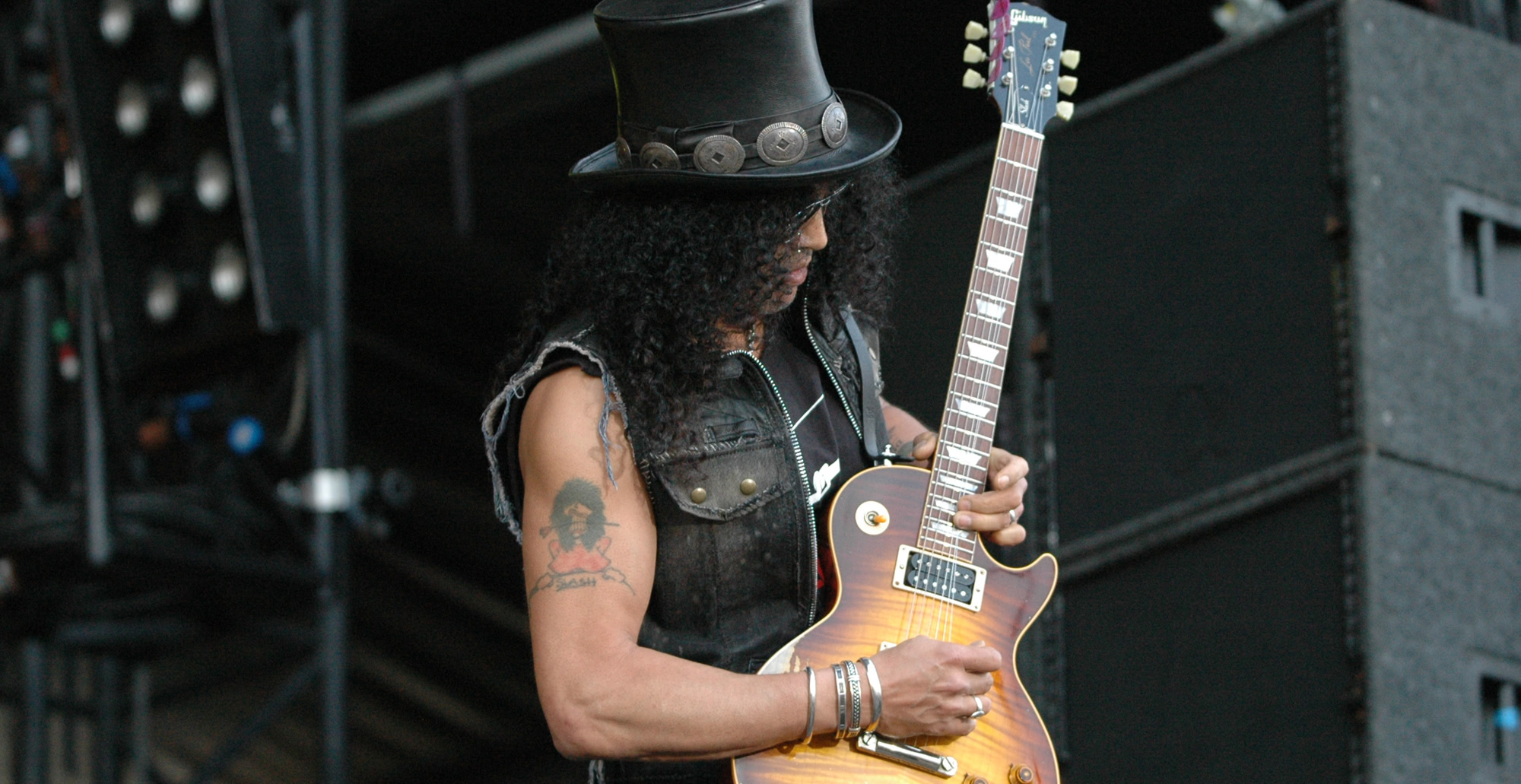
Listening to Slash perform on classic Guns N’Roses tracks, makes it hard to believe that he could be anything other than a homegrown West Coast punk-grunge guitarist. His formative years were spent in Los Angeles, where, according to an interview in Rolling Stone magazine, it was on hearing Rocks by Aerosmith that inspired him to start learning to play the guitar at the age of 14. Within four years, he became a fixture on the local band scene.
However, Saul Hudson, aka Slash was originally English, only to become a naturalized American citizen in the 1990s. He was born in the arty and bourgeois area of Hampstead (London), on 23rd July 1965, living most of his early life in Stoke-on-Trent.
He grew up with the music business all around him. His mother was a costume designer for David Bowie among others; his father, an art director for albums, worked for the likes of Neil Young and Joni Mitchell. And after the family moved to California when Slash was 11 he found himself living next door to record label boss David Geffen (who eventually signed Guns N’Roses), with a who’s who of rock stars dropping in to visit his folks.
That might have introduced him to the lifestyle, but it was no shortcut to success. He was already 15 when he was given his first guitar (by his grandmother), and playing it was hard won – he practised 12 hours a day. He dropped out of school, formed bands and saw bands break up, until, in 1984, he met Axl Rose when their respective bands appeared on the same bill.
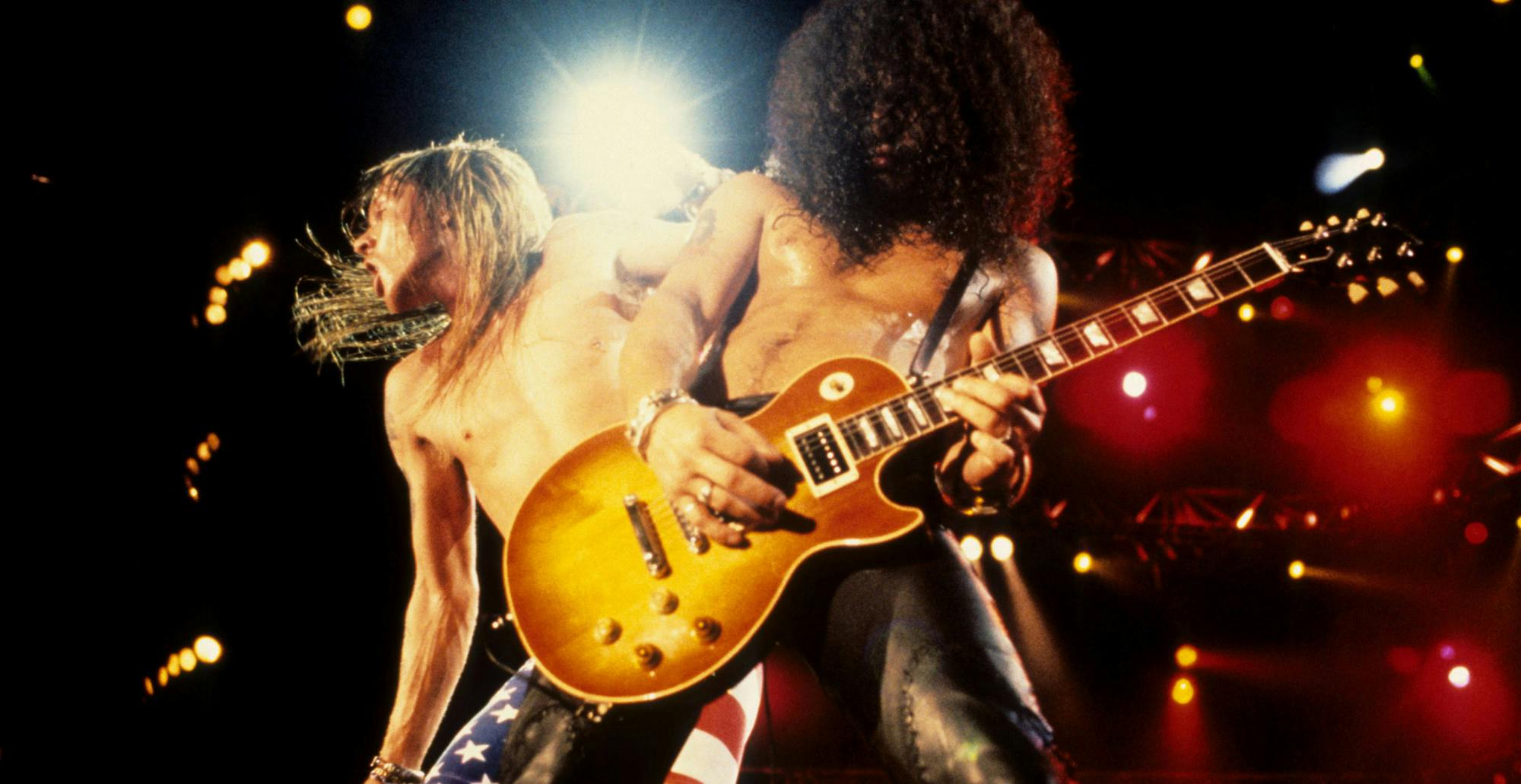
Within months, they decided to form Guns N’Roses and set about paying their dues, gigging in bars and opening for better-known acts, and meanwhile writing the material that would form the backbone of Appetite For Destruction, G N’R’s first album release for the Geffen label.
Slash’s reputation was sealed when Sweet Child O’ Mine went nova and a million guitarists wanted to get their chops around the Dsus4-based riff that kicks it off, never mind the good old-fashioned guitar hero solo that makes up the bulk of the second half. Moreover, those riff, as taught by Danny Gill, still tops the LickLibrary.com chart for most-requested lessons.
Nevertheless, Slash is much more than a one-riff wonder. Readers of the US Guitar World magazine voted his solo on November Rain (also available as a LickLibrary tutorial or lessons on DVD or download) 6th in their list of the 100 Greatest Guitar Solos of All Time, while Slash also regularly tops the search list for LickLibrary’s JamTrax play-along backing tracks.
After the mammoth Use Your Illusion tour in the early 90s, G N’R went quiet, with Axl Rose and Slash unable to agree on the band’s future direction. Slash already had a splinter project called Slash’s Snakepit, and in 1996, he left Guns N’Roses.
Along with Snakepit, he also put together a band playing blues covers, and was much in demand for sessions and live performances with other artists. Though Snakepit’s output was well received, it did not touch the same heights as early G N’R, and Slash’s star appeared to be on the wane.
That all changed with his next project, actually called The Project while it was in gestation before adopting the name Velvet Revolver. This was an amalgam of personnel from Guns N’Roses (Slash, Duff McKagan, Matt Sorum) plus Dave Krushner on rhythm guitar from McKagan’s previous band Loaded, and ex-Stone Temple Pilots front man Scott Weiland.
VR’s first album, Contraband, made number one on the Billboard Top 100, went double platinum, and Slither, taken from the album, won a Grammy. The follow-up album, Libertad even though it was less commercially successful, also won critical approval. In April 2008 VR was said to be working on a third album, although, having sacked Scott Weiland, an immediate priority was also to appoint a new lead singer. Despite that upheaval, Velvet Revolver has succeeded in re-establishing Slash as a top box office draw – as proven by the fact that his likeness appears as the main cover image on the Guitar Hero III video game.