Learn to play The Devil In I - Guitar Lesson
Guitar lesson for this song by Slipknot
The Devil In I – Slipknot
In this in-depth, note-for-note guitar lesson for “The Devil In I”, Richard Shaw delivers a complete breakdown of one of Slipknot’s most powerful modern metal tracks. Designed for players who want to understand not just what to play but how and why, this lesson dives deep into the aggressive rhythm guitar approach, precise articulation, and tight ensemble playing that defines the song. Every riff, transition, and performance detail is explored so you can confidently recreate the track with the authority and intensity it demands.
Song Overview and Lesson Focus
“The Devil In I” is built around dark, driving riffs that balance raw aggression with disciplined control. The guitars play a crucial role in shaping the song’s atmosphere, locking tightly with the drums while leaving space for vocals and layered textures. This lesson walks you through each section of the song in a structured way, ensuring you understand how the riffs connect, how dynamics are controlled, and how subtle performance details elevate the overall impact.
Rather than relying on flashy lead playing, the song focuses on rhythm guitar precision, tonal consistency, and relentless groove. This makes it an ideal study for guitarists looking to strengthen their modern metal rhythm skills and tighten their overall playing.
Power Chords and Low-End Authority
At the core of the song are heavy, low-register power chord riffs. These shapes are used to create a thick, crushing sound that underpins the entire track. Learning how these power chords are voiced and moved across the fretboard will help you achieve a solid, professional-sounding rhythm tone. The lesson explains how to maintain clarity and punch, even when playing at high gain and low tunings.
Mastering these riffs improves your control over string noise, left-hand muting, and right-hand attack—essential skills for any modern metal guitarist.
Palm Muting and Rhythmic Control
Palm muting is used extensively to shape the song’s dynamics. Tight, controlled muting creates a percussive feel that locks in with the drums, while open chords provide contrast and impact. In this lesson, you’ll learn how subtle changes in palm pressure can dramatically affect tone and groove.
Developing this control allows you to play heavy riffs with precision and consistency, helping your rhythm playing sound tighter and more authoritative in any band setting.
Alternate Picking and Picking Hand Precision
Fast, repeated picking patterns demand strong alternate picking technique. The lesson breaks down how to maintain evenness and stamina during longer riff sections without tensing up. You’ll learn how to balance aggression with efficiency so your picking hand stays relaxed while still delivering a powerful attack.
This technique is vital for maintaining accuracy at tempo and avoiding fatigue during demanding rhythm parts.
Galloping and Syncopated Rhythms
“The Devil In I” features driving rhythmic figures that push the song forward. Galloping rhythms add momentum and intensity, while syncopated accents create tension and groove. The lesson explains how these rhythms are constructed and how to count and feel them correctly.
Working through these sections will sharpen your internal timing and improve your ability to lock in with complex drum patterns—an essential skill for modern heavy music.
Slides, Harmonics, and Aggressive Accents
Slides are used to add movement and aggression between chord shapes, while harmonics and pinched harmonics punctuate riffs with sharp, cutting accents. These techniques give the riffs character and attitude without overwhelming the core rhythm parts.
Learning when and how to apply these details will help you add expression and edge to your playing, making your riffs sound more alive and intentional.
Sustain and Open-String Riffs
Sustain plays an important role in creating atmosphere during slower, heavier sections of the song. Letting notes ring while controlling feedback is key to maintaining tension. Open-string riffs add weight and resonance, especially in lower tunings, and require careful muting to avoid unwanted noise.
This lesson shows you how to manage sustain and open strings effectively, improving both tone and control.
The Guitarists and Their Influence
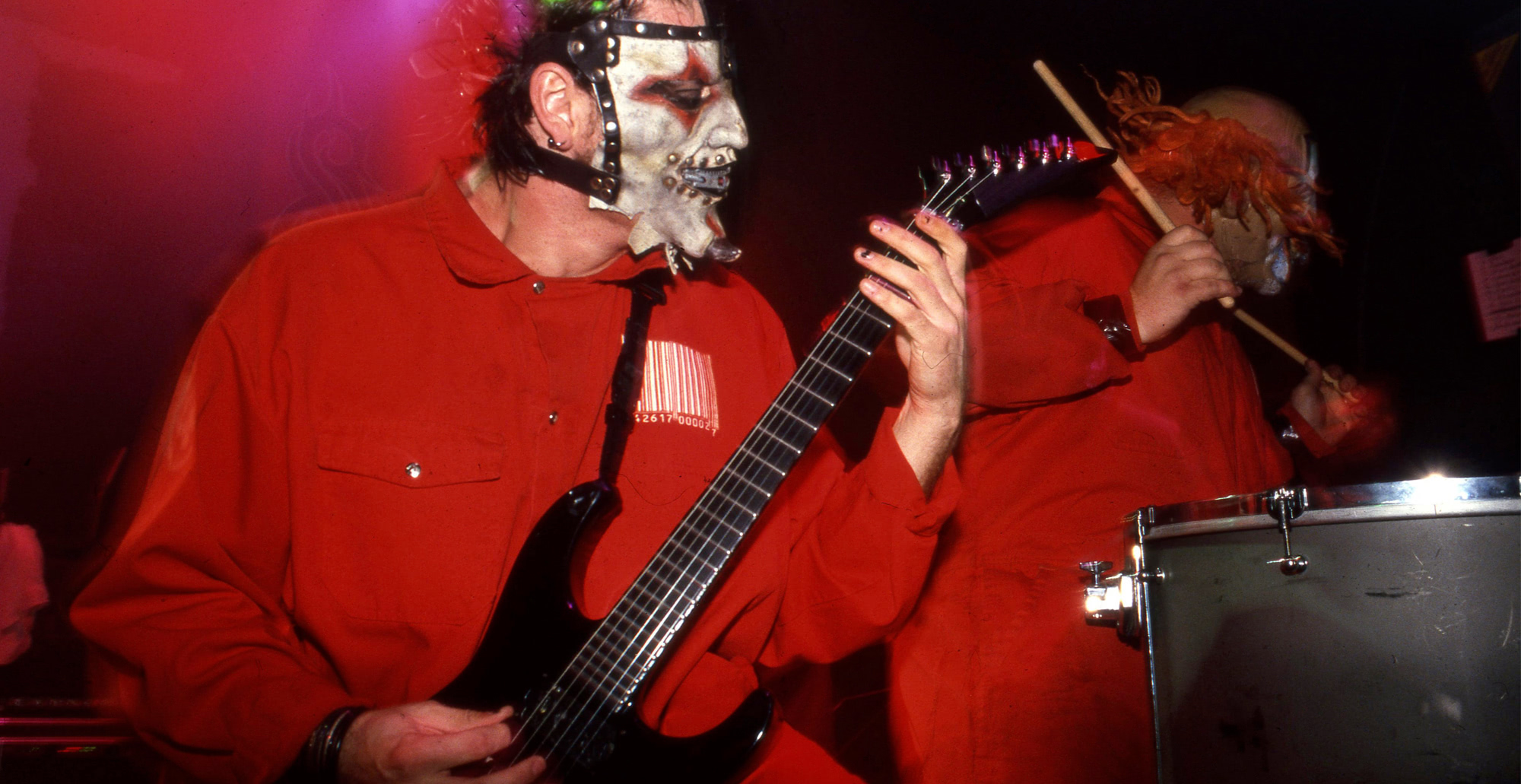
The guitar work on “The Devil In I” is driven by the combined forces of Jim Root and Mick Thomson. Together, they have defined Slipknot’s modern guitar sound with an emphasis on precision, down-tuned heaviness, and disciplined rhythm playing. Their approach blends classic metal aggression with a contemporary focus on tightness and structure, influencing countless modern metal and alternative bands. Studying their playing offers invaluable insight into how powerful rhythm guitar can be without relying on excessive complexity.
Technique List Used in This Lesson
- Power Chords
- Palm Muting
- Alternate Picking
- Galloping Rhythms
- Syncopated Rhythms
- Slides
- Harmonics
- Pinched Harmonics
- Sustain
- Open String Riffs
This lesson is ideal for guitarists looking to refine their modern metal rhythm skills, improve precision under high gain, and capture the dark, relentless energy that defines “The Devil In I.”
Other Slipknot Guitar Lessons

Related Guitar Lessons