Learn to play Screaming For Vengeance - Guitar Lesson
Guitar lesson for this song by Judas Priest
Screaming For Vengeance by Judas Priest
Learn how to play Screaming For Vengeance by Judas Priest with this detailed note-for-note guitar lesson by Danny Gill. Taken from the band's landmark 1982 album of the same name, "Screaming For Vengeance" is a blistering example of classic British heavy metal guitar playing, combining rapid-fire rhythm work, aggressive riffing, harmonised guitars and explosive lead techniques.
This guitar lesson breaks down the essential rhythm and lead parts, giving you the opportunity to develop the precision, speed and control required to tackle the unmistakable guitar style of Judas Priest. From tight palm-muted riffs and power chords to fast alternate picking, string bending and dual-guitar harmonies, learning "Screaming For Vengeance" provides an excellent workout for aspiring rock and metal guitarists.
Fast Metal Riffing & Alternate Picking
One of the defining challenges of "Screaming For Vengeance" is the sheer energy and speed of its guitar parts. Accurate alternate picking is essential for navigating faster single-note passages while maintaining a consistent attack. Rather than relying on excessive movement from the picking hand, the lesson helps you develop an economical approach that keeps the pick close to the strings.
Developing alternate picking through a song like this can significantly improve your speed, stamina and rhythmic accuracy. These skills transfer directly to countless other heavy metal songs, making the track an excellent study for players who want to become more confident with fast, articulate riffing.
Palm Muting & Power Chords
The rhythm guitar parts demonstrate the importance of combining palm muting with powerful, clearly articulated power chords. Palm muting allows the guitarist to control the amount of sustain produced by the lower strings, creating the tight and aggressive sound that forms the foundation of classic heavy metal rhythm guitar.
Learning to move smoothly between muted notes and open, ringing power chords is particularly beneficial for improving dynamics. Instead of every note having the same weight, you can use changes in muting and attack to make riffs sound larger and more dramatic. Power chords also demand accurate fretting and string control, especially when played at the high tempos associated with Judas Priest.
Galloping Rhythms & Rhythmic Precision
Fast galloping rhythms are closely associated with traditional heavy metal guitar, and the Judas Priest style provides an excellent environment in which to develop this technique. Galloping patterns require tight coordination between the picking and fretting hands, along with a strong awareness of subdivisions and accents.
Practising these rhythmic ideas helps build picking-hand stamina and improves your internal sense of timing. Once mastered, galloping rhythms become an invaluable part of your metal rhythm vocabulary, particularly when exploring the music of Judas Priest and other bands from the New Wave of British Heavy Metal era.
String Bending & Vibrato
The lead guitar vocabulary heard in "Screaming For Vengeance" features expressive string bending and vibrato, two essential techniques for creating convincing rock and metal solos. Accurate bends require you to reach the intended pitch cleanly, while controlled vibrato adds movement and character to sustained notes.
Learning these techniques within a real Judas Priest solo helps you understand how they work musically rather than simply treating them as isolated exercises. Improving your bending accuracy and vibrato will make your lead playing sound more confident, expressive and professional, while also helping you develop better control over pitch and sustain.
Legato, Hammer-Ons & Pull-Offs
Fast lead guitar phrases often benefit from a combination of picked notes and legato articulation. Hammer-ons and pull-offs allow notes to flow smoothly without every pitch needing to be picked individually, creating fluid lines that contrast effectively with more aggressively picked passages.
Working on these techniques improves fretting-hand strength, independence and coordination. It also gives you more options when constructing your own solos, allowing you to move between precise picked phrases and smoother legato runs depending on the sound and feel you want to achieve.
Dual-Guitar Harmonies
One of the most influential aspects of Judas Priest's sound is the use of dual-guitar harmonies. Harmonised melodic lines allow two guitars to create a much larger and more dramatic sound than a single lead part, and they became an important feature of British and American heavy metal throughout the 1980s and beyond.
Studying these harmonised parts can improve your understanding of intervals, melody and how separate guitar lines interact. It is also valuable ear training, helping you recognise how harmony can transform a relatively straightforward melody into something powerful and unmistakably metal.
Chromaticism & Heavy Metal Lead Vocabulary
The song's aggressive character also provides an opportunity to explore chromaticism, where notes outside a straightforward scale pattern are used to create tension and movement. Chromatic ideas can be particularly effective in metal because they introduce darker, more unpredictable sounds while also providing useful connections between scale positions.
Learning how these notes function within riffs and lead passages expands your fretboard vocabulary. Rather than relying entirely on familiar scale shapes, you can begin to see the guitar neck as a connected musical landscape and incorporate chromatic passing tones into your own riffs and solos.
K.K. Downing & Glenn Tipton
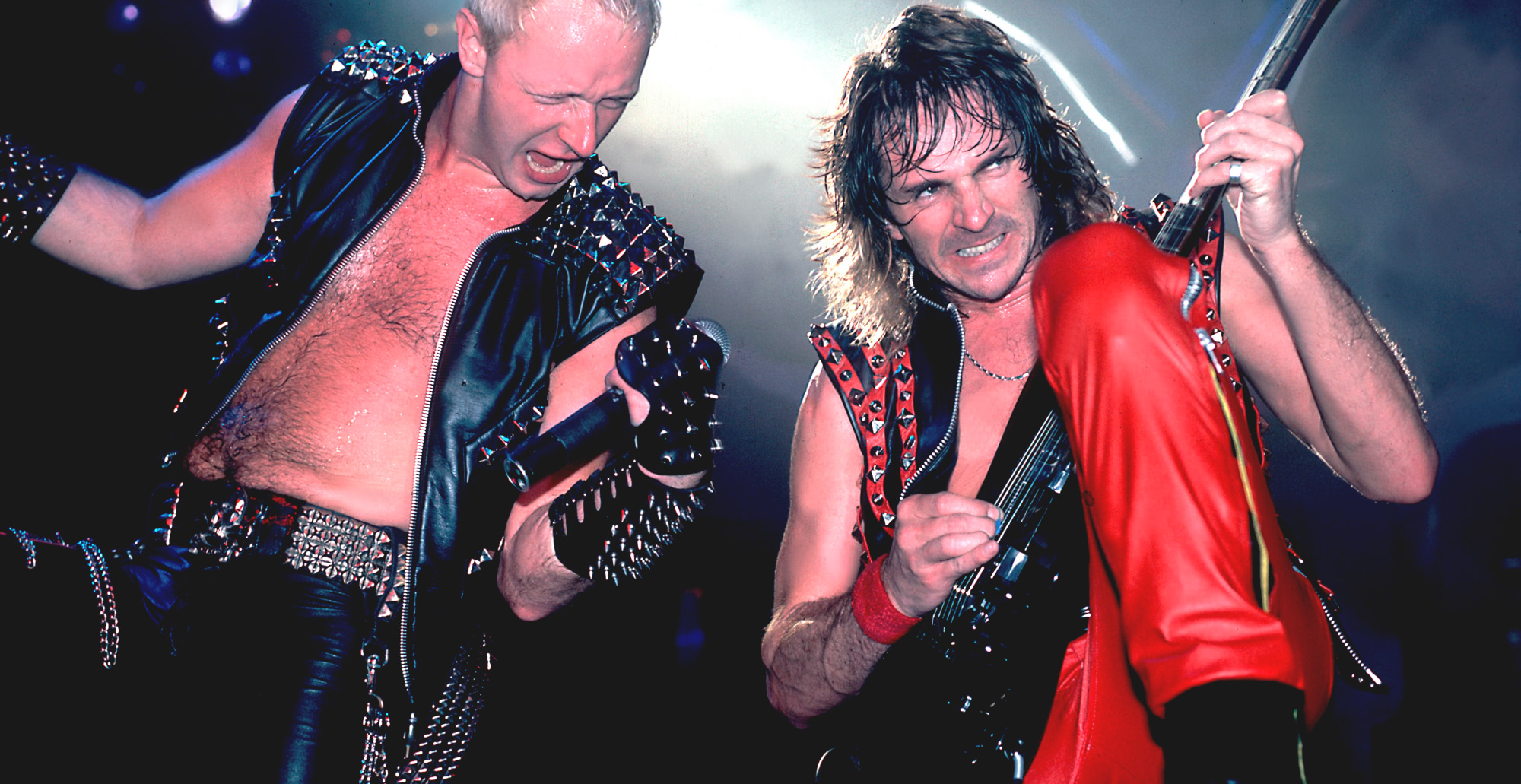
K.K. Downing and Glenn Tipton formed one of heavy metal's most influential twin-guitar partnerships, and their work with Judas Priest helped establish many of the techniques and sounds that became fundamental to the genre. Their combination of aggressive rhythm playing, harmonised leads and contrasting solo styles gave Judas Priest a distinctive guitar identity. Downing's energetic, raw attack worked brilliantly alongside Tipton's more precise and melodic approach, while their harmonised guitar lines influenced generations of metal bands. Learning "Screaming For Vengeance" provides an opportunity to study the vocabulary of two players who played a major role in defining the sound of heavy metal guitar.
Why Learn Screaming For Vengeance?
Learning "Screaming For Vengeance" is an excellent challenge for intermediate and advanced guitarists looking to improve their metal rhythm and lead skills. The speed of the track demands accuracy and stamina, while the combination of rhythm riffs, harmonised parts and lead guitar techniques makes it a comprehensive workout for both hands.
More importantly, these techniques are highly transferable. Alternate picking will help with faster riffs and solos, palm muting will strengthen your rhythm playing, bending and vibrato will improve your phrasing, and studying dual-guitar harmonies can broaden your understanding of melody and arrangement.
By working through this Screaming For Vengeance guitar lesson, you'll gain insight into the unmistakable guitar style of Judas Priest while developing techniques that can be applied across classic heavy metal, hard rock, thrash metal and modern metal. It's a demanding track, but mastering its riffs and lead passages is a rewarding way to improve your speed, precision and overall command of the guitar.
Techniques Used
- Alternate Picking
- Palm Muting
- Power Chords
- Galloping Rhythms
- String Bending
- Vibrato
- Legato
- Hammer-Ons
- Pull-Offs
- Dual-Guitar Harmonies
- Chromaticism
- Sustain
Other Judas Priest Guitar Lessons

Related Guitar Lessons