
Classic Albums - The Extremist - Guitar Course
Complete Album Lessons with Danny Gill
Guitar Lessons In The Course


Classic Albums - The Extremist

Song Lessons in this Course
This Course is Ideal for Players Who...
This course is designed for intermediate to advanced guitarists who are passionate about instrumental rock and want to learn from one of the genre’s most influential albums. It is especially suited for those who want to:
- Learn to play Joe Satriani’s The Extremist album in its entirety.
- Improve their melodic phrasing, solo construction, and expressive techniques.
- Gain a deeper understanding of advanced scale application and harmonic concepts.
- Master a wide range of rock guitar techniques, including legato, alternate picking, and whammy bar.
- Develop their ability to tell a story and convey emotion through their guitar playing.
What will I achieve from completing this course?
This course offers a complete song-by-song breakdown of Joe Satriani’s The Extremist, providing in-depth analysis of each track’s composition, technique, and harmonic structure. You will gain a deep understanding of Satriani’s unique approach to melody, soloing, and sound design, equipping you with the skills to incorporate his signature style into your own playing.
Here’s a breakdown of what you’ll learn to play:
Master the uplifting Lydian-infused melodies and lyrical soloing of this fan favorite.
- The Extremist: Learn the aggressive blues-rock riffs and fusion-inspired soloing of the iconic title track.
- War: Discover how to create cinematic tension and dramatic solos using textural and dynamic techniques.
- Cryin’: Uncover the secrets to Satriani’s most expressive and vocal-like melodic phrasing.
- Rubina’s Blue Sky Happiness: Develop your clean-tone articulation and fingerstyle-inspired lead playing.
Learn the high-energy riffs, explosive solos, and iconic whammy bar techniques of this rock anthem.
- Tears In The Rain: Master the art of expressive fingerstyle and arpeggiated chordal melodies.
- Why: Learn to craft memorable, hook-laden solos with a focus on melodic development.
- Motorcycle Driver: Inject attitude and swagger into your playing with aggressive pentatonic phrasing and bluesy bends.
- New Blues: Dive deep into modern blues-rock soloing with sophisticated phrasing and soulful expression.
WE CAN HELP...
1-ON-1 COACHING
Access to thousands of lessons is great, but without a plan you can feel like you’re practicing in circles. Book your FREE 1-on-1 video call with a Licklibrary pro to fix your technique, build a practice plan, get motivated, or overcome any challenge. It's all included in your membership!
** Disclaimer **
*This product is not endorsed by or made in association with
Joe Satriani
nor does
Joe Satriani
perform or appear on this course.*
The Extremist by Joe Satriani
Joe Satriani’s The Extremist (1992) remains one of the most melodic, expressive, and compositionally rich instrumental guitar albums ever recorded. For guitarists, it is a masterclass in phrasing, tone crafting, scale application, and the art of telling a story without vocals. Blending rock, blues, fusion, and cinematic atmosphere, Satriani delivers an album where every track features purposeful writing—not just gratuitous shred.
Danny Gill breaks down this classic album in this exclusive Lick Library video course.
Below is a guitarist-focused breakdown of the album, examining the nuances of each song, discussing scale choices, solo construction, and the techniques that define the guitar work throughout the record.
Joe Satriani
Joe Satriani’s playing on The Extremist is a prime example of his ability to merge technical mastery with deep musicality. Unlike many virtuoso guitarists of the era, Satriani never uses technique for technique’s sake—every phrase serves the composition. His contribution to this album lies in:
- Melodic storytelling: memorable main themes that behave like vocal lines.
- Advanced yet musical scale usage: mixing major, Mixolydian, Dorian, blues scales, and his trademark Lydian sounds.
- Expressive articulation: wide bends, smooth legato, vocal-style phrasing.
- Tone craftsmanship: using dynamics, modulation, and amp saturation to shape movement within a track.
- Innovative sound design: clever use of harmonics, whammy bar phrasing, and textural effects.
Satriani’s playing here is not about maximum speed—it’s about maximum expression. Each solo pushes emotional narrative first while still offering breathtaking technical passages.
Track-by-Track Breakdown & Guitar Analysis
1. Friends
“Friends” is an uplifting, melodic instrumental built around major tonalities and bright thematic writing.
Scales and Harmonic Foundation
Primarily in A major with shifts into A Lydian, Satriani uses diatonic major sounds but colours the main melody with the #4 characteristic of Lydian, giving it a soaring, optimistic feel.
Guitar Solo Analysis
The solo blends lyrical major-scale motifs with bursts of fluid legato runs. A notable feature is Satriani’s emphasis on vocal-like bends and sustained notes placed at emotionally significant moments. He avoids overplaying, focusing more on phrasing curvature than technical density.
Guitarist Notes
Great for studying major-key melodic development, dynamics, and crafting themes that are easy to sing back.
2. The Extremist
The title track is more aggressive, leaning into blues-rock phrasing framed by Satriani’s fusion sensibility.
Scales and Harmonic Approach
A combination of:
- E minor pentatonic
- E natural minor
- E Dorian (especially in transition riffs)
- Occasional chromaticism for tension
Guitar Solo Analysis
The solo features expressive string bending, blues-infused double-stops, and fast alternate-picked bursts that punctuate blues lines. Satriani shifts between pentatonic grit and modal sophistication, giving the solo both attitude and depth.
Guitarist Notes
This track is a study in how to expand pentatonic vocabulary into modal and chromatic territory while maintaining groove-driven precision.
3. War
One of Satriani’s most atmospheric compositions, “War” carries dramatic energy with heavily processed guitars and dynamic swells.
Scales and Harmonic Palette
Centred around E minor with dramatic movements into harmonic minor–flavoured passages for tension.
Guitar Solo Analysis
The solo here is cinematic. Satriani uses slides, wide bends, and sustain-heavy phrases that evolve into more intense lines as the arrangement escalates. Occasional tremolo-picked motifs add urgency.
Guitarist Notes
An excellent lesson in “textural soloing”—using effects, dynamics, and melodic contour to convey emotion rather than relying purely on technique.
4. Cryin’
A fan favourite and one of Satriani’s most expressive tracks, “Cryin’” is built on emotional phrasing reminiscent of vocal ballads.
Scales and Harmonic Language
Largely based in A major, with heavy use of A Lydian tones in the lead melodies. Blues bends add soulful tension.
Guitar Solo Analysis
This solo is a masterclass in melodic development, sustain, and vibrato. Every note is placed with intention. Satriani seamlessly blends scalar melodies with lyrical bends and tasteful legato passages. Rather than shredding, he builds emotional peaks through carefully shaped arcs.
Guitarist Notes
A must-study for players wanting to improve expression, vibrato, and emotional storytelling on the guitar.
5. Rubina’s Blue Sky Happiness
A warm, heartfelt piece combining finger-style textures with smooth legato leads.
Scales and Harmony
Primarily in G major with occasional detours to G Mixolydian. The melodic ideas feel pastoral, airy, and up-lifting.
Guitar Solo Analysis
The solo features soft slides, melodic hammer-ons/pull-offs, and tastefully executed harmonics. The phrasing is light and dreamy rather than forceful.
Guitarist Notes
A great study in clean-tone articulation and building lead lines that complement a gentle atmosphere.
6. Summer Song
One of Satriani’s most iconic tracks—an energetic rock anthem built for big stages and wide-open spaces.
Scales and Harmonic Framework
Primarily in E major with heavy Mixolydian influence. The riffs are power-chord-driven and rhythmically punchy.
Guitar Solo Analysis
The solo starts with melodic clarity and gradually evolves into fireworks. Satriani employs alternate picking, rapid legato runs, expressive whammy bar phrasing, and clever pinched harmonics. His rhythmic placement makes even fast lines feel grounded.
Guitarist Notes
This is quintessential Satriani—catchy riffs, a huge chorus melody, and a solo that balances melody and virtuosity.
7. Tears in the Rain
A short but beautifully written fingerstyle composition.
Scales and Harmony
Centred around B minor, using arpeggiated chord movements and classical-influenced voicings.
Guitar Solo / Lead Notes
There is no traditional solo here. Instead, Satriani uses arpeggiated chord progressions and expressive note choices to convey emotion. The track’s beauty lies in its restraint.
Guitarist Notes
A great finger-style study and a demonstration of how to use chords to express a melody without needing a dedicated lead line.
8. Why
“Why” blends pop-rock energy with Satriani’s signature melodic flair.
Scales and Harmony
Built around D major and D Lydian, giving the melodies a shimmering, hopeful character.
Guitar Solo Analysis
The solo is a blend of lyrical ascents, fluid legato phrases, and string-bending climaxes. Satriani’s placement of melodic peaks demonstrates expert control over tension and release.
Guitarist Notes
Useful for studying how to craft memorable leads without overplaying—each phrase feels like a hook.
9. Motorcycle Driver
A high-energy rock track with a gritty attitude.
Scales and Harmony
Primarily A minor pentatonic, A blues scale, and touches of A Dorian.
Guitar Solo Analysis
Packed with aggressive phrasing—rakes, double-stops, bluesy bends, and rapid pentatonic bursts. Satriani uses rhythmic variation to keep familiar scale shapes sounding fresh.
Guitarist Notes
A lesson in how to inject attitude and swagger into minor-key rock playing.
10. New Blues
A swaggering, expressive blues-rock closer.
Scales and Harmony
As expected, it leans heavily on:
- A blues scale
- A minor pentatonic
- Occasional major-pentatonic inflections, adding sophistication
Guitar Solo Analysis
A true blues showcase—vocal bends, call-and-response phrasing, and tasty vibrato. Satriani proves once again that phrasing and feel can speak louder than speed.
Guitarist Notes
Perfect for guitarists studying how to blend traditional blues vocabulary with modern tonal influences.
Guitar Techniques Used in The Extremist
Related Guitar Courses

Study Surfing With The Alien with Danny Gill at Lick Library. Learn blazing riffs, legato runs and tone from a landmark instrumental guitar album.

Learn Joe Satriani guitar techniques with Danny Gill at Lick Library. Explore melodic instrumental rock.

Learn to play in the style of Joe Satriani with Andy James at Lick Library. Explore melodic phrasing, legato and instrumental rock techniques.

Learn Joe Satriani guitar techniques with Tom Quayle at Lick Library. Explore melodic phrasing and instrumental guitar ideas.
Learn Joe Satriani style licks with Danny Gill at Lick Library. Explore melodic phrasing and instrumental rock techniques.

Learn the Locrian mode with Danny Gill at Lick Library. Explore unique sounds and applications inspired by Joe Satriani’s style.
Learn Joe Satriani inspired licks with Danny Gill at Lick Library. Develop melodic phrasing, legato techniques and expressive instrumental rock solo ideas.

Learn five classic instrumentals from guitar legends Steve Vai, Gary Moore, Joe Satriani, Duane Allman and Santana note for note. Tracks include: For T…
Learn Joe Satriani inspired licks with Danny Gill at Lick Library. Explore melodic phrasing, legato and expressive instrumental rock soloing.

Learn iconic 80s guitar riffs with Danny Gill at Lick Library. Explore classic rock and metal riffs inspired by legendary players and bands.
Learn legato guitar techniques from scratch with Tom Quayle at Lick Library. Build smooth hammer-ons and pull-offs for fluid lead playing.

Master all seven guitar modes with Danny Gill. Learn Ionian, Dorian, Phrygian and more to improve your solos, phrasing and fretboard knowledge.

Master rock guitar in 6 weeks with Danny Gill. Learn pentatonics, blues scales, bends, vibrato, and iconic rock licks with structured lessons.

Learn whammy bar techniques with Sam Bell at Lick Library. Add dives, vibrato and expression while maintaining tuning and control.

Learn how to play fast on guitar with Dave Kilminster at Lick Library. Develop speed, control and precision for rock and metal lead playing.

Learn to solo with modes using Danny Gill at Lick Library. Understand modal sounds and applications for creative rock and fusion improvisation.

Develop smooth legato licks with Stuart Bull at Lick Library. Improve hammer-ons, pull-offs and fluid lead guitar phrasing for rock and metal.
Take your speed further with Dave Kilminster at Lick Library. Improve technique, accuracy and control for faster, cleaner lead guitar playing.
Learn to play in the style of Chickenfoot with Danny Gill at Lick Library. Explore blues rock riffs and modern hard rock guitar techniques.
Explore the Wim Roelants guitar experience at Lick Library. Learn modern rock concepts, expressive phrasing and advanced guitar techniques.
Learn Steve Vai inspired licks with Andy James at Lick Library. Explore expressive phrasing, technique and modern instrumental rock concepts.
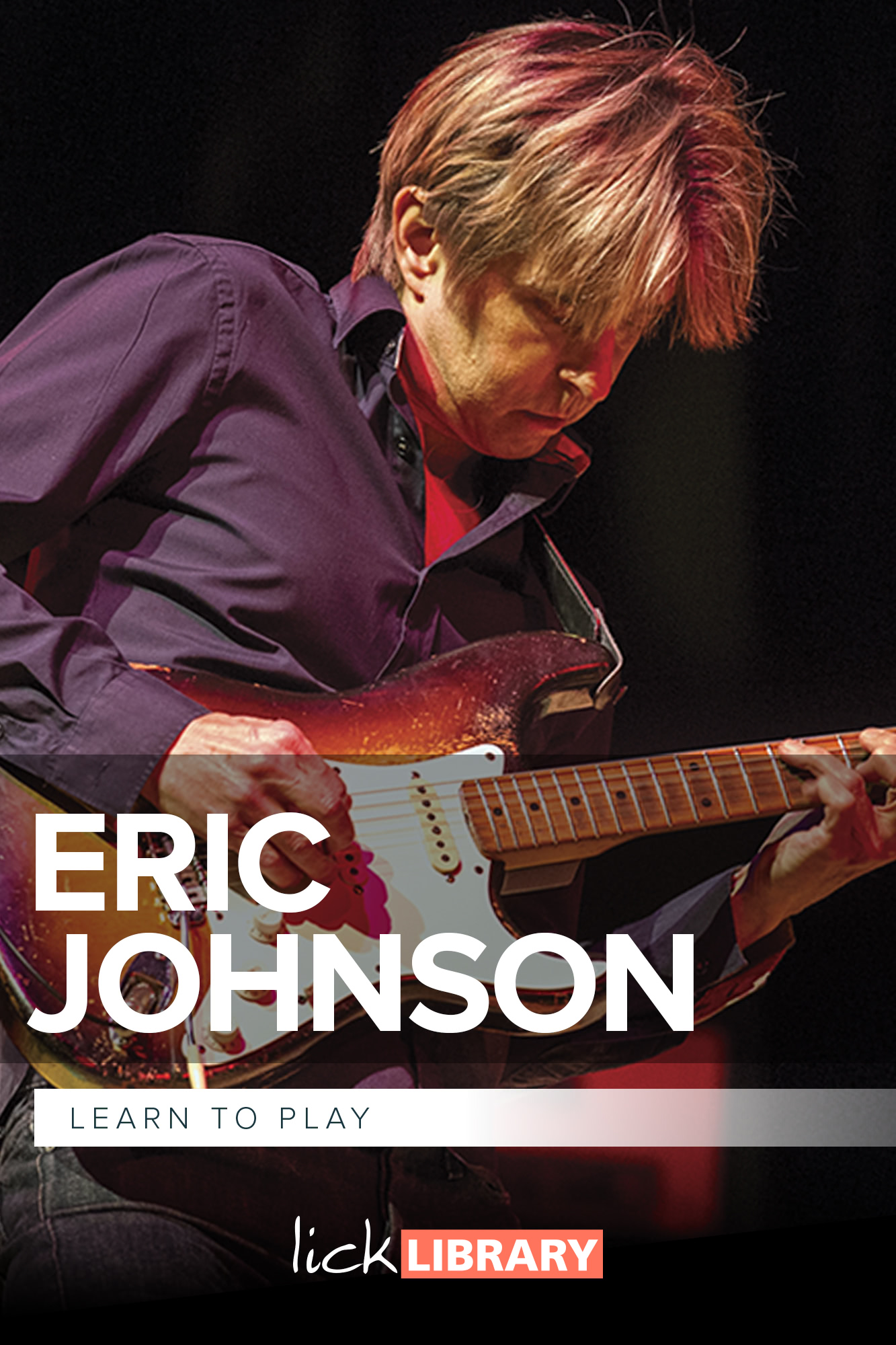
Learn to play in the style of Eric Johnson with Rick Graham at Lick Library. Explore melodic phrasing, tone and advanced lead guitar concepts.

Learn Yngwie Malmsteen style licks with Andy James at Lick Library. Explore neoclassical shredding, fast runs and precision techniques for rock and metal guitar.

Learn Steve Vai solos with Andy James at Lick Library. Explore advanced techniques, phrasing and expressive instrumental guitar concepts.

Learn the Phrygian mode with Danny Gill at Lick Library. Explore neoclassical phrasing and scale ideas inspired by Yngwie Malmsteen.
Learn classical-inspired shredding with Andy James at Lick Library. Develop precision and speed using neoclassical guitar techniques and runs.
Explore classical shredding with Danny Gill at Lick Library. Learn fast neoclassical runs and techniques for advanced rock and metal playing.
Explore the Dorian mode with Danny Gill at Lick Library. Learn soulful phrasing and modal concepts inspired by Santana’s guitar style.

Explore the Lydian mode with Danny Gill at Lick Library. Learn modern fusion ideas and melodic phrasing inspired by Steve Vai.

Learn to play in the style of Steve Vai at Lick Library. Explore advanced techniques, phrasing and expressive modern guitar playing.