Learn to play Burn It To The Ground - Guitar Lesson
Guitar lesson for this song by Nickelback
Burn It To The Ground by Nickelback
Learn how to play “Burn It To The Ground” by Nickelback with this detailed note-for-note guitar lesson by Richard Shaw. Released on the band’s 2008 album Dark Horse, “Burn It To The Ground” is built around a huge, aggressive guitar sound, combining heavy riffing, powerful chord work and a relentless rhythmic groove. It is an excellent track for guitarists looking to develop the tight, controlled rhythm techniques that define modern hard rock.
This guitar lesson breaks down the key guitar parts found throughout “Burn It To The Ground”, helping you understand how the riffs are constructed and how the guitars lock into the drums and bass to create the song’s unmistakable energy. Along the way, you’ll work on techniques including altered tuning, power chords, palm muting, slides, syncopated rhythms and controlled sustain.
Heavy Main Guitar Riff
At the centre of “Burn It To The Ground” is its instantly recognisable main guitar riff. The part demonstrates how a relatively direct rhythmic idea can sound enormous when performed with precision, confident picking and the right amount of space between notes. Rather than relying on overly complex lead guitar vocabulary, the riff gets its impact from timing, articulation and the weight of the low strings.
Learning this riff is particularly useful for developing picking-hand control and rhythmic accuracy. Heavy rock riffs need to remain tight even when played with high levels of distortion, where unwanted string noise can quickly make a part sound messy. Practising the riff slowly before bringing it up to speed will help you develop greater control over note duration, rests and accents.
Altered Tuning
One of the defining elements of the guitar sound in “Burn It To The Ground” is the use of altered tuning, which gives the guitars access to a deeper and heavier register. Lower tunings are an important part of modern hard rock and metal guitar playing, allowing riffs and power chord shapes to take on additional weight without requiring complicated fingerings.
Learning to play effectively in altered tunings helps expand your understanding of the fretboard and encourages you to approach familiar riff shapes from a different perspective. It also teaches you how lower-pitched strings respond differently under the picking hand, requiring careful control to maintain clarity and definition.
Power Chords
Power chords play an essential role in the massive guitar sound of “Burn It To The Ground”. Their simple root-and-fifth construction makes them ideal for high-gain guitar tones, producing a strong and focused sound without becoming overly harmonically cluttered.
Working through the power chord sections in this lesson will improve your ability to move confidently between chord positions while maintaining consistent timing. Power chords are fundamental to rock, punk and metal guitar, so developing accurate fretting, clean transitions and effective muting will benefit your playing across an enormous range of songs and styles.
Palm Muting and Picking Control
The heavier rhythmic passages require careful control of the strings, making palm muting an important part of achieving the correct feel. By lightly resting the edge of the picking hand against the strings near the bridge, you can shorten the notes and create the tight, percussive attack associated with modern hard rock rhythm guitar.
Learning to vary the amount of palm muting is equally important. Moving between tightly muted notes and more open, ringing chords creates contrast and makes riffs feel more dynamic. Developing this control will help you produce cleaner rhythm parts and prevent excessive distortion from overwhelming the detail within your playing.
Syncopated Rhythms
The groove of “Burn It To The Ground” depends heavily on syncopated rhythms, with guitar accents interacting closely with the bass and drums. Understanding exactly where these accents fall is crucial to recreating the powerful, swaggering feel of the original recording.
Practising syncopated guitar riffs develops your internal sense of time and helps you become more comfortable playing rhythmic figures that do not simply follow the strongest beats of the bar. This is especially valuable for rock and metal guitarists, as syncopation is frequently used to make otherwise straightforward riffs feel heavier, more unpredictable and more exciting.
Slides and Riff Articulation
Slides provide additional movement and attitude within the guitar parts, connecting notes and chord shapes with a smooth but aggressive articulation. In a riff-based track like this, small details such as slides can make a significant difference to the authenticity of the performance.
Working on slides helps improve fretting-hand accuracy because the movement needs to arrive precisely at the target fret while remaining perfectly in time. This technique is transferable to rhythm and lead guitar playing and is an effective way to add expression to riffs without introducing unnecessary complexity.
Sustain and Dynamic Control
Although much of the track is built around tightly controlled rhythm playing, allowing selected chords and notes to sustain creates important contrast. Knowing when to let the guitar ring and when to stop the strings sharply is a major part of reproducing the arrangement accurately.
Learning to control sustain develops both fretting-hand and picking-hand muting. This is particularly useful when playing with distorted tones, where sympathetic string noise can quickly become noticeable. Mastering the balance between sustained chords and tightly muted passages will make your rhythm guitar playing sound more polished and professional.
The Guitarists Behind Burn It To The Ground
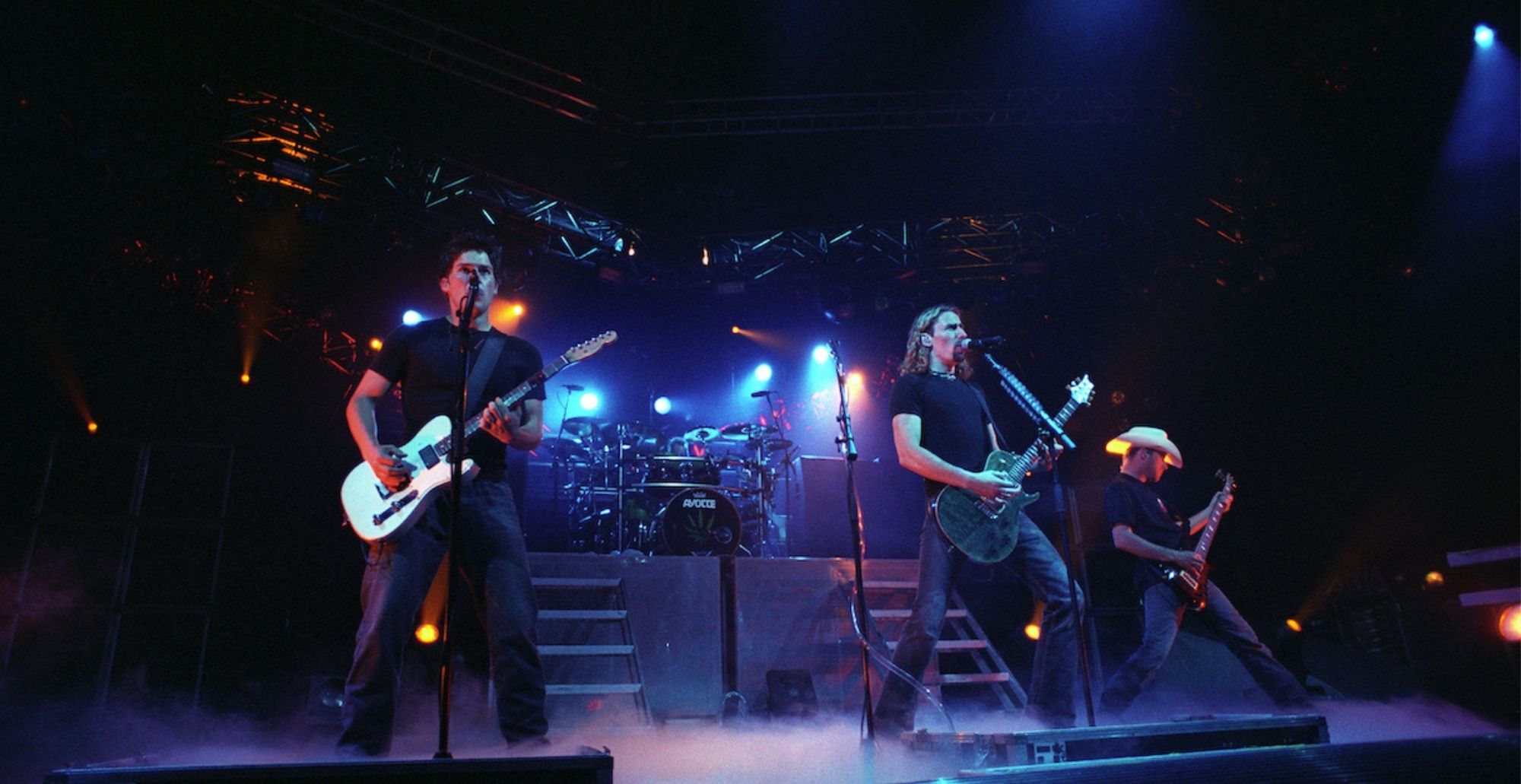
Nickelback’s guitar sound is shaped primarily by Chad Kroeger and Ryan Peake, whose complementary rhythm parts have been central to the band’s style. Kroeger’s approach often favours direct, powerful riffs designed to work closely with the vocal and rhythm section, while Peake contributes additional guitar layers that help broaden the band’s live and recorded sound.
Their influence can be heard in the polished but extremely heavy guitar production that became characteristic of mainstream hard rock during the 2000s. Rather than focusing exclusively on technical lead playing, Nickelback demonstrate the importance of strong riffs, precise rhythm guitar and effective arrangement. “Burn It To The Ground” is an excellent example of how carefully controlled guitar parts can create a huge sound without sacrificing groove.
Why Learn Burn It To The Ground?
Learning “Burn It To The Ground” is an excellent workout for any guitarist interested in hard rock rhythm playing. The song demands strong timing, accurate muting and confident chord changes while teaching you how relatively simple guitar ideas can become incredibly effective when articulation and dynamics are carefully controlled.
By studying the riffs note for note, you can improve your ability to play with high-gain tones while keeping every note clear and purposeful. The combination of altered tuning, palm-muted riffing, power chords, syncopation and dynamic control also makes the song a useful study in modern rock guitar arrangement.
Whether you are developing your rhythm guitar technique, expanding your repertoire of heavy riffs or simply want to learn one of Nickelback’s most energetic songs, this “Burn It To The Ground” guitar lesson provides an engaging way to improve your timing, picking accuracy and overall control.
Guitar Techniques Used
Related Guitar Lessons