Learn to play Chinatown - Guitar Lesson
Guitar lesson for this song by Thin Lizzy
Chinatown by Thin Lizzy
Learn how to play “Chinatown” by Thin Lizzy with this detailed note-for-note guitar lesson by Danny Gill, exploring the hard rock riffs, melodic lead lines and trademark twin-guitar ideas that make the track such a powerful example of the band’s later sound. Released in 1980 as the title track from the Chinatown album, the song combines Phil Lynott’s unmistakable songwriting with muscular rhythm guitar work and expressive melodic leads.
For guitarists, “Chinatown” offers an excellent study in the balance between rhythm and lead playing that defined so much of Thin Lizzy’s music. The lesson explores the song’s driving riffs, chord changes, melodic fills and lead guitar passages, helping you develop the timing, articulation and phrasing required to reproduce the track accurately. Along the way, you’ll encounter techniques including power chords, palm muting, string bending, vibrato, slides, hammer-ons, pull-offs and Thin Lizzy’s signature dual-guitar harmony approach.
Main Riff and Rhythm Guitar
The rhythm guitar parts in “Chinatown” demonstrate how relatively straightforward rock vocabulary can become much more powerful through precise timing and confident articulation. The main riff has a tough, energetic feel, with power chord shapes and tightly controlled single-note movement creating the foundation for the track.
Power chords are fundamental to hard rock guitar, and learning the power chord-based sections of “Chinatown” is a great way to improve your fretting-hand accuracy and rhythm guitar consistency. Because power chords can be moved around the fretboard easily, mastering these shapes also gives you an essential tool for playing countless classic rock and metal songs.
Palm muting helps control the lower strings and gives sections of the rhythm guitar part additional punch. Developing accurate palm muting teaches you to control the amount of sustain and attack in each note, allowing you to move between tight, percussive sounds and more open ringing chords without interrupting the groove.
Chord Progressions and Rock Rhythm Playing
Beyond the individual riffs, “Chinatown” is an excellent lesson in how chord progressions can support a strong vocal melody while still leaving space for lead guitar embellishments. Thin Lizzy’s rhythm guitar arrangements often sound deceptively simple, but the interaction between the guitars, bass and drums gives the music considerable depth.
Learning the chord progressions in the song helps develop your understanding of classic rock harmony and arrangement. Rather than viewing each chord in isolation, you can begin to hear how one chord leads naturally into another and how a progression creates tension and release. This is especially valuable for guitarists interested in songwriting and constructing their own riffs.
Dual Guitar Harmonies
One of the defining features of the Thin Lizzy guitar sound is the use of harmonised lead guitars. “Chinatown” provides an opportunity to study how separate guitar melodies can work together to create a much larger and more distinctive sound.
Practising dual guitar harmonies develops melodic awareness and helps you understand the relationship between notes within a key. Even when playing the part alone, learning both sides of a harmonised phrase can improve your knowledge of intervals and fretboard navigation. It is also invaluable for guitarists playing in two-guitar bands, where accurate timing and articulation are essential if harmonised lines are to sound tight.
String Bending and Vibrato
The lead guitar vocabulary in “Chinatown” draws heavily on expressive classic rock phrasing. String bending allows notes to move smoothly between pitches, adding a vocal quality to lead lines. Working through the bends in the song will help you improve pitch accuracy, finger strength and control, all of which are essential for convincing rock and blues soloing.
Vibrato adds movement and expression to sustained notes. Learning to control the width and speed of your vibrato makes a significant difference to the character of your lead playing. Studying the vibrato heard in “Chinatown” can help you move beyond simply playing the correct notes and focus on making those notes sound expressive and authoritative.
Hammer-Ons, Pull-Offs and Legato Phrasing
The lead passages also make use of smooth fretting-hand articulation. Hammer-ons allow notes to be sounded without picking every attack, helping create faster and more fluid phrases while improving fretting-hand strength and independence.
Pull-offs perform a similar role when moving from a higher fretted note to a lower one. Practising clean pull-offs helps develop control over note volume and articulation, preventing legato phrases from becoming uneven or indistinct.
Together, hammer-ons and pull-offs contribute to legato phrasing. Developing this technique gives you an alternative to picking every note and allows melodic lines to flow more naturally across the fretboard. It can also improve coordination between the picking and fretting hands when switching between picked and slurred notes.
Slides and Melodic Movement
Slides are another important expressive device within classic rock lead guitar. Sliding between notes creates a smooth transition while giving phrases additional attitude and momentum. Learning the slides in “Chinatown” can improve your ability to move confidently between fretboard positions and connect melodic ideas without interrupting the flow of a phrase.
Slides are particularly useful when combined with bends, vibrato and legato techniques, helping transform basic scale-based ideas into more musical lead guitar phrases.
The Guitarists – Scott Gorham and Snowy White
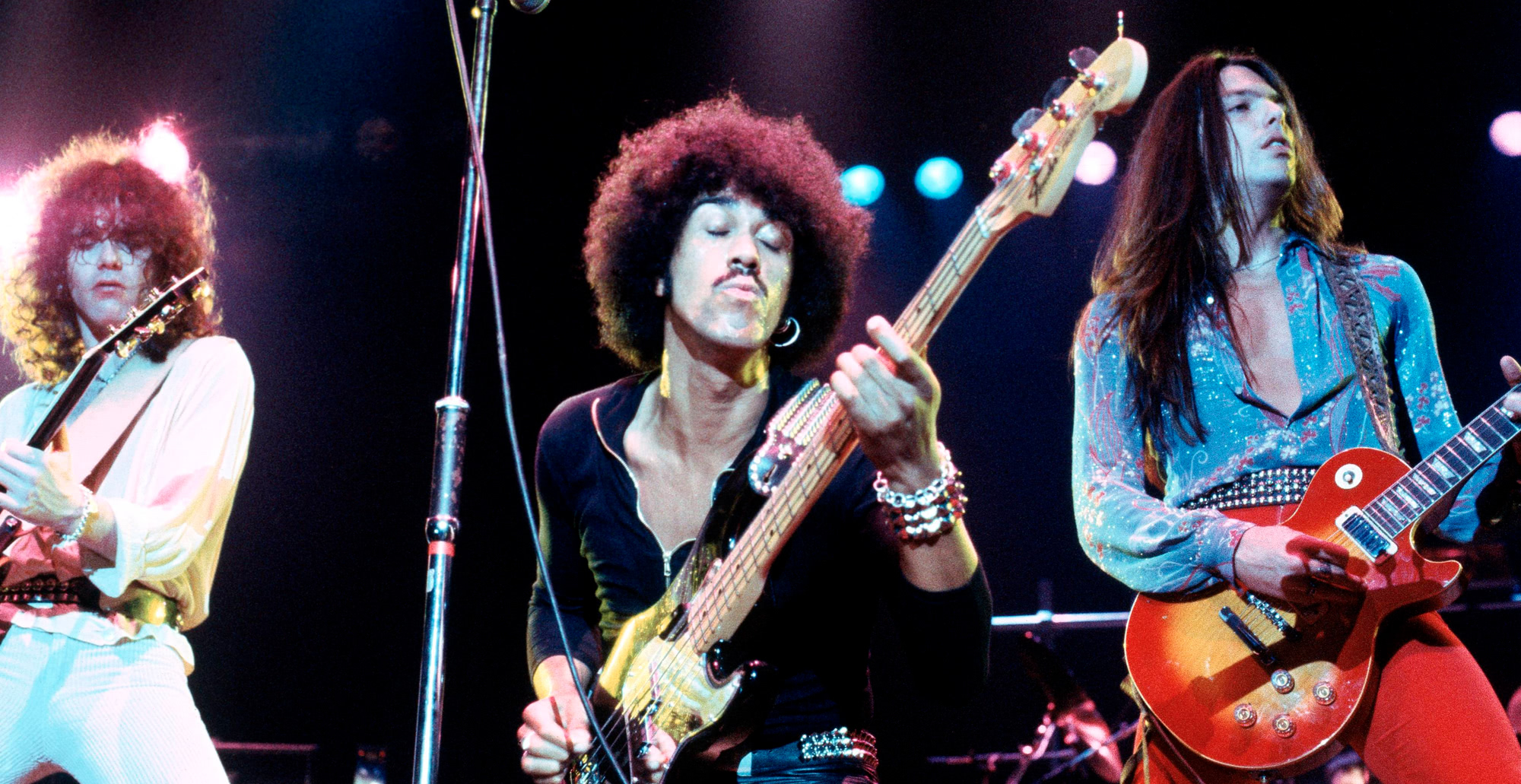
“Chinatown” represents an important period in Thin Lizzy’s history, with Scott Gorham and Snowy White forming the band’s guitar partnership. Gorham had already played a major role in establishing Thin Lizzy’s famous twin-lead guitar identity, contributing to the melodic hard rock vocabulary that influenced generations of players. His smooth phrasing, expressive bends and melodic sensibility became central elements of the Thin Lizzy sound.
Snowy White brought a different character to the band, with a blues-rooted, controlled and highly expressive approach to lead guitar. His playing added another dimension to Thin Lizzy’s established harmony-guitar formula. Studying “Chinatown” therefore offers guitarists the chance to explore how two distinctive players can complement one another while still serving the same song.
Why Learn Chinatown by Thin Lizzy?
Learning “Chinatown” is an excellent workout for any guitarist interested in classic rock, hard rock and melodic lead guitar. The song combines powerful rhythm playing with expressive soloing and harmonised guitar lines, requiring you to move confidently between different roles.
By working through the song note for note, you can improve your power chord accuracy, palm muting, timing, lead guitar articulation, bending, vibrato and legato technique. Just as importantly, the lesson demonstrates how Thin Lizzy constructed guitar arrangements in which rhythm riffs and melodic lead parts work together rather than competing for space.
Whether you are a Thin Lizzy fan or simply want to expand your classic rock guitar vocabulary, learning “Chinatown” provides a practical way to develop both rhythm and lead skills while studying the distinctive twin-guitar approach of one of rock’s most influential guitar bands.
Techniques Used
- Vibrato
- Legato
- Chord Progressions
- Pull-Offs
- Power Chords
- Palm Muting
- Hammer-Ons
- Slides
- Sustain
- String Bending
- Dual Guitar Harmonies
Other Thin Lizzy Guitar Lessons



Related Guitar Lessons