

Classic Albums - Black Sabbath - Guitar Course
Complete Album Lessons with Danny Gill
Guitar Lessons In The Course
Classic Albums - Black Sabbath

Song Lessons in this Course
Song-by-Song Guitar Lessons Taught by Danny Gill
This course provides detailed, note-for-note guitar lessons for every track on the seminal Black Sabbath album, ensuring you master the iconic riffs and solos that changed music forever.
This Course is Ideal for Players Who...
This course is ideal for players who are looking for focused guitar lessons and want to:
• Transition from Classic Rock to Metal: You have a solid foundation in rock and blues but want to learn the specific techniques and theory that separate hard rock from heavy metal.
• Build a Foundation in Heavy Riffing: You want to learn the most influential and foundational riffs in rock history to develop a powerful, driving rhythm style.
• Focus on Tone and Feel: You prioritise expressive playing, massive tone, and emotional vibrato over shredding speed.
• Master the Minor Pentatonic: You want to see how the blues scale can be used in a dark, heavy, and innovative way to create a signature sound.
• Explore 70s Rock and Metal: You are a fan of the early heavy sound and want to understand the origins of genres like doom, stoner, and sludge metal.
What will I achieve from completing this course?
By completing these Black Sabbath guitar lessons, you will not only add a legendary album to your repertoire but also gain a profound understanding of the techniques that define heavy guitar playing. This course is a direct path to improving your rhythmic precision, tonal control, and creative soloing.
• Master the Art of the Riff: Learn how to construct and execute heavy, memorable riffs using power chords, the tritone, and downtuning—skills essential for all 70s metal guitar.
• Develop Expressive Soloing: Move beyond speed and focus on phrasing, vibrato, and sustain, learning to tell a story with every note, a hallmark of Iommi's style.
• Improve Rhythmic Precision: Gain a rock-solid sense of time by tackling the complex, syncopated rhythms and dramatic use of space found in tracks like "The Wizard" and
"Black Sabbath."
• Unlock Blues-Metal Fusion: Bridge the gap between traditional blues and heavy metal by understanding how Iommi integrated the minor pentatonic and blues scale into a darker, heavier context.
• Expand Your Technique Vocabulary: Perfect fundamental techniques like string bending, hammer-ons, pull-offs, and palm-muting within the context of classic rock and metal.
WE CAN HELP...
1-ON-1 COACHING
Access to thousands of lessons is great, but without a plan you can feel like you’re practicing in circles. Book your FREE 1-on-1 video call with a Licklibrary pro to fix your technique, build a practice plan, get motivated, or overcome any challenge. It's all included in your membership!
** Disclaimer **
*This product is not endorsed by or made in association with
Black Sabbath
nor does
Black Sabbath
perform or appear on this course.*
Black Sabbath – Black Sabbath
When Black Sabbath released their self-titled debut in 1970, the world of guitar-driven music changed forever. For many, this record marks the birth of heavy metal, and while the raw production might sound primitive compared to modern standards, the guitar work of Tony Iommi is nothing short of revolutionary. His riffs, scales, and solo phrasing laid the blueprint for countless sub-genres to come.
This breakdown is written with guitarists in mind—covering the scales, chord progressions, soloing approaches, and techniques that define this album. We’ll analyse each track, then reflect on Iommi’s overall contribution and lasting influence. Danny Gill breaks down this classic album in this exclusive Lick Library video course.
Tony Iommi: The Architect of Heavy Metal Guitar
Before diving into the tracks, it’s worth understanding Tony Iommi’s unique approach. After losing the tips of two fingers in a factory accident, Iommi adapted by crafting thimble-like prosthetics and tuning down his guitar (a practice that later became common in metal) to ease string tension. This adaptation not only shaped his sound but also inadvertently gave birth to the dark, sludgy tonalities that became synonymous with Black Sabbath.
Iommi’s playing blends blues phrasing with classical-inspired riffs, often relying on minor pentatonic, natural minor, and chromaticism. His solos are rarely about speed; instead, they focus on phrasing, bends, sustain, and emotive vibrato, which makes them timeless.
Track-by-Track Analysis
1. Black Sabbath
The album opener, and perhaps the most influential riff in heavy music. The main riff is essentially a tritone interval (root to flat fifth), sometimes referred to as the “Devil’s Interval.” Played slowly with ringing power chords, this progression set the tone for doom metal decades ahead.
- Scales Used: The riff draws from G natural minor with chromatic movement (G–G♯–A).
- Solo: The solo is bluesy, with string bending and slides dominating. Iommi employs the G minor pentatonic scale but decorates it with chromatic passing notes, giving the solo a haunting, almost unstable character.
- Techniques: Heavy reliance on sustain and vibrato.
This track was groundbreaking for its space—rather than filling every moment with sound, Iommi lets the riffs breathe, creating tension through silence as much as distortion.
2. The Wizard
Opening with a harmonica riff, this track quickly shifts into a boogie-driven blues rock piece, showcasing Iommi’s ability to swing.
- Scales Used: Primarily E blues scale (E–G–A–B♭–B–D).
- Riffs: The riffs use open-string riffs and a shuffling syncopated rhythm, almost like sped-up Cream or John Mayall.
- Solo: Iommi leans into hammer-ons and pull-offs, blending fast legato runs with bluesy bends. He alternates between rapid-fire licks and slower bends, building tension before resolving back into the groove.
This song shows the band’s deep blues roots but played heavier and with more grit than their contemporaries.
3. Behind the Wall of Sleep
This track is an early example of riff-based composition, where the riff itself drives the song more than the chord progressions.
- Scales Used: Mostly E minor pentatonic with chromatic passing tones.
- Riffs: Built around power chords and single-note runs, the main riff has a hypnotic quality.
- Solo: A tight solo emphasising phrasing over speed. Lots of minor third bends and trills (link) add a sinister vibe.
The groove is held together by palm-muting and simple, crushingly heavy guitar lines.
4. N.I.B.
Perhaps the most famous track on the album (next to the title track), “N.I.B.” features one of Iommi’s all-time greatest riffs.
- Scales Used: Rooted in E minor pentatonic but expanded with bluesy chromaticism.
- Riffing: The intro bass solo leads into a massive guitar riff, combining power chords with slides. The riff has a proto-doom feel, yet still grooves.
- Solo: Classic Iommi—phrases built from the E minor pentatonic, employing expressive string bending, double-stops, and a touch of chromaticism. His use of bluesy bends creates drama without needing high speed.
This song’s riff became a cornerstone of metal guitar vocabulary.
5. Evil Woman
A cover of Crow’s tune, “Evil Woman” might feel out of place to some, but it shows Sabbath’s roots in late ’60s hard rock.
- Scales Used: Primarily E minor pentatonic and Dorian mode.
- Riffs: Straightforward barre chord-driven rock riffing, with a slightly lighter tone compared to the originals.
- Solo: Iommi spices up the solo with hammer-ons, pull-offs, and wide vibrato. It’s blues-rock soloing with a heavier hand.
Though not as iconic as the originals, it highlights Iommi’s ability to take a straightforward rock song and make it heavier.
6. Sleeping Village
Opening with an eerie acoustic intro (using finger-picking), this track transitions into sludgy riffing that foreshadows stoner and doom metal.
- Scales Used: C♯ minor with modal shifts.
- Riffs: The main riff is slow, heavy, and drenched in distortion, showcasing early Sabbath’s proto-doom identity.
- Solo: Built from C♯ minor pentatonic, emphasising sustain and expressive bends. Iommi uses space effectively, allowing each note to linger.
This track feels experimental and atmospheric, proving Sabbath wasn’t just about straightforward riffing.
7. Warning
At over 10 minutes, this extended jam shows Sabbath’s roots in blues improvisation.
- Scales Used: Primarily A minor pentatonic.
- Solo: This is Iommi’s showcase. He explores every corner of the fretboard with string bending, slides, double-stops, and fast alternate picking. His phrasing is bluesy but with a darker, heavier edge.
- Techniques: A mix of legato, trills, and chromaticism. The use of sustain here is critical—notes ring out with an almost vocal-like intensity.
Though rooted in blues, the sheer heaviness of the tone separates it from Cream or Hendrix jams, marking new ground.
Conclusion: Iommi’s Lasting Contribution
With Black Sabbath, Tony Iommi didn’t just write riffs—he rewrote the rules of guitar playing. His use of downtuning, tritones, power chords, and heavy sustain created a sonic palette that defined metal. For guitarists, this album remains essential listening because it bridges blues traditions with the birth of something entirely new.
Guitar Techniques Used on Black Sabbath
Below is a list of techniques featured on the album, with links for guitarists wanting to dive deeper:
Related Guitar Courses
Study Black Sabbath’s Heaven And Hell with Danny Gill at Lick Library. Learn heavy riffs, solos and tones that helped shape classic metal guitar.
Jam with Black Sabbath style tracks with Danny Gill at Lick Library. Explore heavy riffs and early metal guitar techniques.

Study Black Sabbath Volume 4 with Danny Gill at Lick Library. Learn heavy riffs, tone and techniques from Tony Iommi’s iconic playing.
Study Black Sabbath’s Paranoid with Danny Gill at Lick Library. Learn heavy riffs, tone and techniques that helped define early metal guitar.

Learn classic metal guitar with Danny Gill at Lick Library. Explore heavy riffs and techniques inspired by early metal pioneers.

Study Black Sabbath’s Master Of Reality with Danny Gill at Lick Library. Learn heavy riffs, tone and techniques that shaped metal guitar.

Learn Randy Rhoads guitar techniques with Jamie Humphries at Lick Library. Explore neoclassical phrasing and metal lead guitar.

Learn Tony Iommi guitar techniques with Nick Jennison at Lick Library. Explore heavy riffs and classic metal guitar foundations.

Learn the styles of Randy Rhoads and Zakk Wylde with Jamie Humphries at Lick Library. Explore classic metal phrasing.
Learn Randy Rhoads solos with Danny Gill at Lick Library. Explore neoclassical phrasing and iconic metal lead guitar techniques.
Learn Zakk Wylde solos with Andy James at Lick Library. Explore aggressive phrasing, pinch harmonics and modern metal techniques.
Study Ozzy Osbourne’s Diary Of A Madman with Danny Gill at Lick Library. Learn iconic riffs and solos inspired by Randy Rhoads.

Learn to play metal guitar licks in the style of Zakk Wylde. Also includes a Zakk Wylde style metal guitar jam track. Lessons by Andy James. Each Quick Li…

Learn Randy Rhoads inspired licks with Jamie Humphries at Lick Library. Explore neoclassical metal phrasing and iconic hard rock guitar techniques.
Study Blizzard Of Ozz with Danny Gill at Lick Library. Learn iconic riffs, solos and techniques that launched Randy Rhoads into guitar history.

Learn 20 classic rock riffs with Danny Gill at Lick Library. Build your repertoire with iconic riffs and essential rock guitar techniques.

Master Zakk Wylde's iconic shredding techniques with Andy James. Learn licks, riffs, pinch harmonics, and more in this exclusive Lick Library tech session.

Learn classic rock riffs with Danny Gill at Lick Library. Explore iconic riffs from legendary bands and build your rock guitar vocabulary.

Learn to play in the style of Ozzy Osbourne with Danny Gill at Lick Library. Explore classic metal riffs, solos and iconic guitar techniques.

Learn Zakk Wylde guitar techniques with Nick Jennison at Lick Library. Explore aggressive phrasing and modern metal techniques.

Learn metal guitar techniques with Jamie Humphries at Lick Library. Build speed, precision and modern metal playing skills.

Learn Ozzy-inspired guitar licks with Jamie Humphries at Lick Library. Explore hard rock phrasing and techniques influenced by Randy Rhoads and Zakk Wylde.

Learn iconic 80s guitar riffs with Danny Gill at Lick Library. Explore classic rock and metal riffs inspired by legendary players and bands.

Continue your rock guitar journey with Nick Jennison and Stuart Shields at Lick Library. Learn riffs, songs and techniques from classic rock influences.

Study Metallica’s Master Of Puppets with Danny Gill at Lick Library. Learn aggressive riffs, solos and rhythm techniques from a metal masterpiece.

Learn Iron Maiden guitar techniques with Jamie Humphries at Lick Library. Explore galloping riffs and twin lead harmonies.
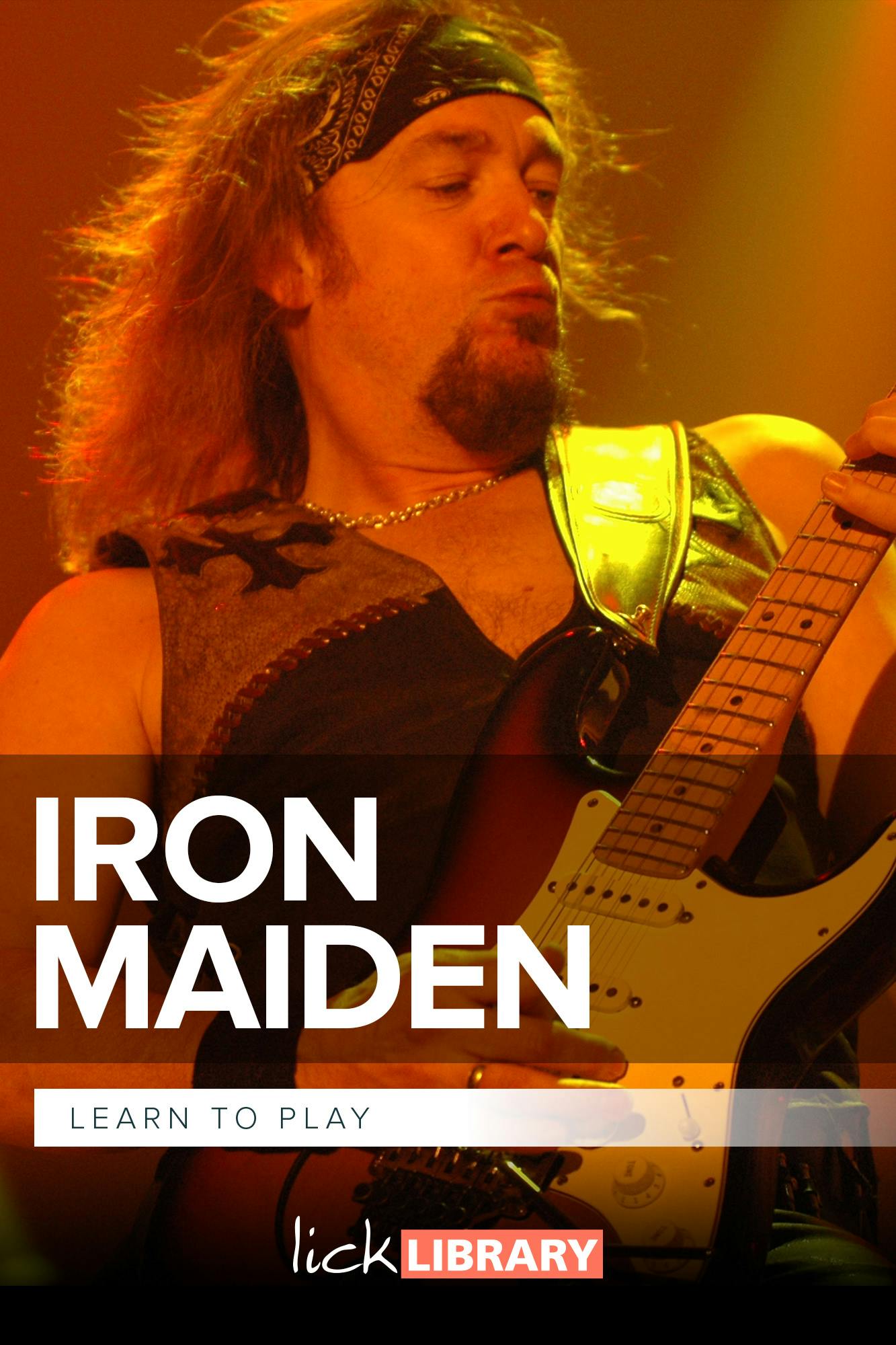
Learn to play in the style of Iron Maiden with Danny Gill at Lick Library. Explore classic metal riffs and twin lead guitar techniques.

Study Iron Maiden’s Powerslave with Sam Bell at Lick Library. Learn galloping riffs, harmonies and solos from one of metal’s most influential albums.
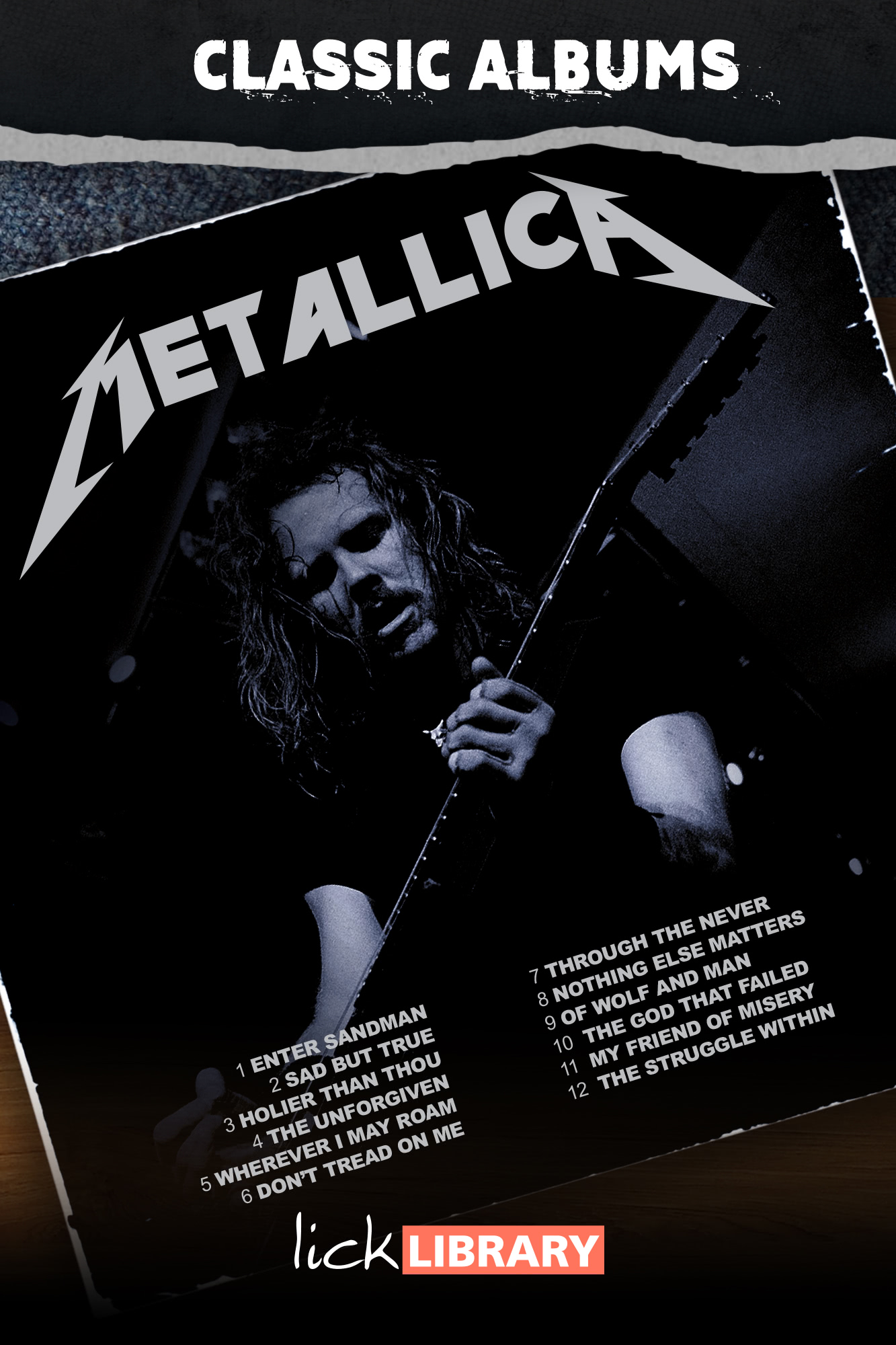
Study Metallica’s Black Album with Jamie Humphries at Lick Library. Learn heavy riffs, tight rhythms and iconic metal guitar techniques.
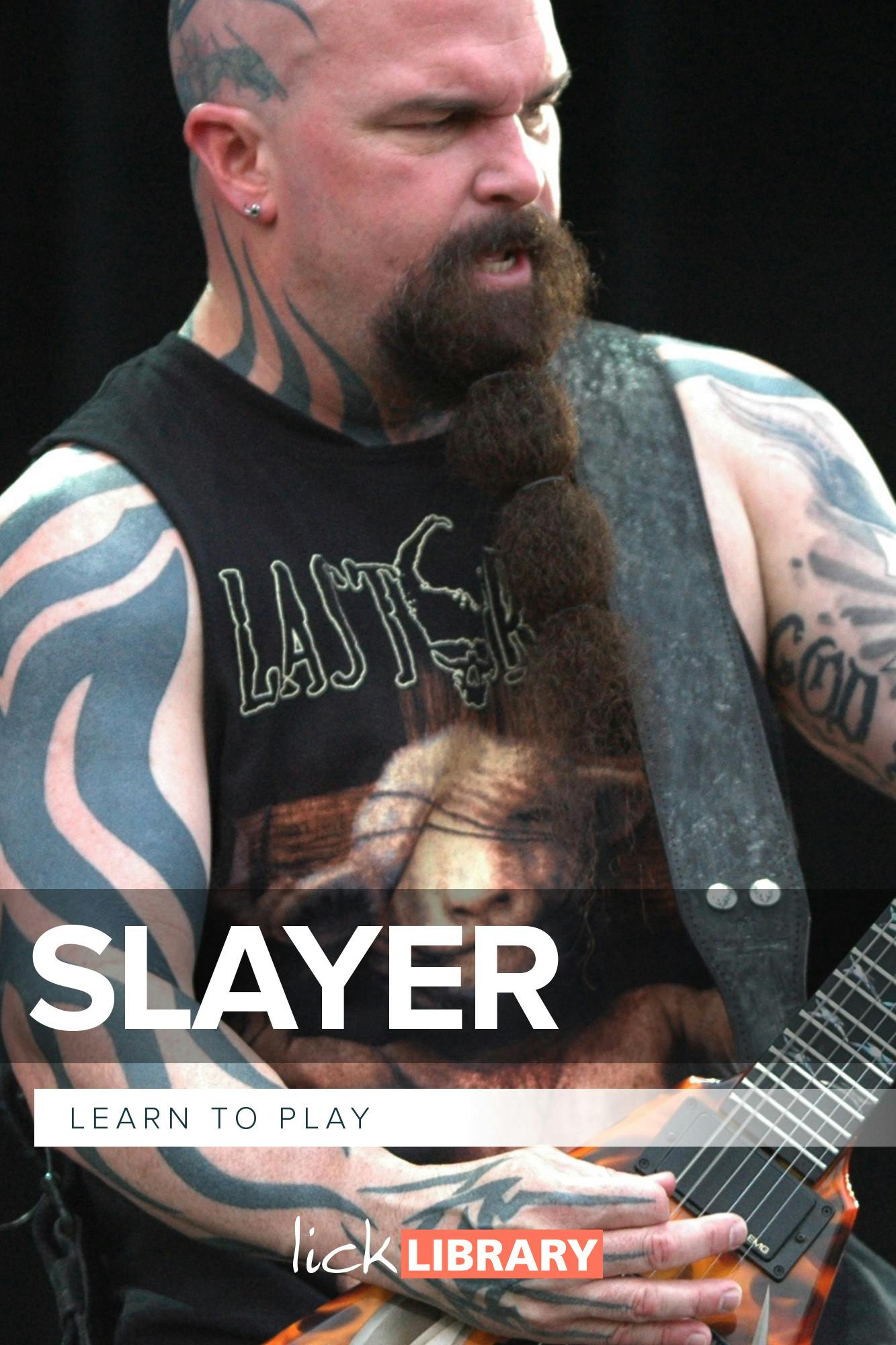
Learn to play in the style of Slayer with Andy James at Lick Library. Explore fast aggressive riffs, alternate picking and metal lead techniques.