

Classic Albums - Dr. Feelgood - Guitar Course
Complete Album Lessons with Danny Gill
Guitar Lessons In The Course

Classic Albums - Dr. Feelgood

Song Lessons in this Course
Song-by-Song Guitar Lessons Taught by Danny Gill
T.N.T. (Terror 'N Tinseltown)
Dr. Feelgood
Slice of Your Pie
Rattlesnake Shake
Kickstart My Heart
Without You
Same Ol' Situation (S.O.S.)
Sticky Sweet
She Goes Down
Don't Go Away Mad (Just Go Away)
Time for Change
This Course is Ideal for Players Who...
This course is ideally suited to intermediate and advanced guitarists who are ready to commit to a serious, in-depth study of a classic album. You do not need to be a virtuoso to get started, but a working knowledge of power chords, basic pentatonic soloing, and standard rock rhythm techniques will help you get the most from the material. These Mötley Crüe guitar lessons are a natural fit for players who grew up with the sounds of the Sunset Strip and want to reconnect with the music that first inspired them to pick up a guitar. They are equally valuable for younger players who have discovered the Dr. Feelgood album and want to understand why it has endured as a benchmark of the genre. If you are working through a broader programme of 80s rock guitar lessons and want to anchor your studies in a complete, cohesive album rather than isolated tracks, this course provides exactly that kind of structured, contextual learning. Players who are specifically working on their lead guitar development will find the solo breakdowns particularly rewarding. Mars is not a shredder in the conventional sense — his solos are composed, purposeful, and deeply rooted in feel — which makes them excellent study material for guitarists who want to develop a more musical, less mechanical approach to lead playing. The Doctor Feelgood guitar lesson series and the dedicated Kickstart My Heart guitar lesson are standout examples of this approach in action. If your goal is to become a more complete, more confident, and more expressive rock guitarist, this course will give you the tools, the context, and the inspiration to get there.
What will I achieve from completing this course?
Completing this course will give you a thorough grounding in the guitar vocabulary of hard rock and glam metal, built around one of the genre's most celebrated albums. The skills you develop here extend well beyond Mötley Crüe — they are the foundational techniques of 80s rock guitar and remain relevant across a wide spectrum of rock and metal styles.
By working through these guitar lessons from start to finish, you will:
• Master the essential techniques of hard rock rhythm guitar, including palm muting, power chord articulation, syncopated strumming, pick slides, and galloping rhythmic patterns. These are the building blocks of virtually every rock and metal style, and developing fluency in them will transform your rhythm playing.
• Build a confident, expressive lead guitar vocabulary rooted in the minor pentatonic and blues scales, with an understanding of how to incorporate chromaticism, natural minor, and mixolydian ideas to add colour and sophistication to your solos.
• Develop precise whammy bar control, from subtle pitch vibrato and pre-dive setups to full dive bombs and the kind of dramatic motorcycle-revving effects that open "Kickstart My Heart." This is a technique that separates players who merely own a tremolo system from those who genuinely use it as a musical tool.
• Improve your picking technique across a range of contexts — from the tight, percussive alternate picking required for high-speed riff passages to the more fluid, legato-influenced phrasing of Mars' slower, more melodic solo sections.
• Understand how tone and dynamics serve the song. One of the most important lessons Mars teaches is that great rock guitar is not just about technical ability — it is about knowing when to hold back and when to let loose. This course will help you develop that musical judgement.
• Gain insight into the production and arrangement context of the album, understanding how Bob Rock's production shaped the guitar sounds and how Mars' parts interact with the rhythm section to create the album's distinctive sonic character.
WE CAN HELP...
1-ON-1 COACHING
Access to thousands of lessons is great, but without a plan you can feel like you’re practicing in circles. Book your FREE 1-on-1 video call with a Licklibrary pro to fix your technique, build a practice plan, get motivated, or overcome any challenge. It's all included in your membership!
** Disclaimer **
*This product is not endorsed by or made in association with
Motley Crue
nor does
Motley Crue
perform or appear on this course.*
Mötley Crüe – Dr. Feelgood
Released in 1989, Dr. Feelgood stands as Mötley Crüe’s most commercially successful album, but for guitarists, it’s much more than a collection of hit singles. It’s an essential study in hard rock riff-writing, high-octane solos, and tonecraft. Mick Mars, the band’s enigmatic guitarist, was at his absolute peak on this record. His playing combines raw aggression with surprising technical finesse, all wrapped in a blues-drenched metal framework.
The production by Bob Rock gave the guitars a clarity and punch that set a new standard in late-’80s metal. The rhythms are thick and percussive, the leads cut through with searing sustain, and Mars’ tonal choices highlight the dynamics of each song. For guitarists, the album is a lesson in riff economy, phrasing, and rock-metal articulation. Danny Gill breaks down every song on this classic album in this exclusive Lick Library video course.
Track-by-Track Guitar Breakdown
1. T.n.T. (Terror ’n Tinseltown)
This short instrumental intro sets the tone with a dark, cinematic soundscape. The guitars are drenched in effects, creating tension with sustain and layered textures. While not riff-heavy, it introduces the dangerous, urban feel that runs through the album.
2. Dr. Feelgood
The title track is a riff masterclass. Mars locks into a power chord-driven groove built around the E minor pentatonic scale, spiced with chromatic notes. The opening riff uses palm-muting to give a tight, percussive attack, almost functioning as an extra rhythm instrument alongside Tommy Lee’s drums.
The solo is classic Mars: rooted in E minor pentatonic with flashes of bluesy bends and slides. He doesn’t overplay — instead, he delivers short bursts of energy with pinched harmonics and string bending that cut through the mix like a razor.
3. Slice of Your Pie
This track blends sleaze-rock swagger with psychedelic textures. The main riff leans on open-string riffs in A, creating resonance and drive. The rhythm section supports with syncopated rhythms, giving the riff a swung, blues-inflected feel.
Mars’ solo shifts between A minor pentatonic and natural minor with hammer-ons and pull-offs. The outro riff channels Led Zeppelin with layered guitars and a trippy whammy-bar trick descent.
4. Rattlesnake Shake
Pure party-rock riffing. The main guitar part is in G, built on chunky barre chords with heavy pick-slides between sections. The solo is frenetic, making use of alternate picking across G minor pentatonic runs.
The standout here is the use of galloping rhythms in the riff, which injects a metal edge into an otherwise bluesy rocker.
5. Kickstart My Heart
Perhaps Mars’ most iconic riff. The track kicks off with a whammy-bar trick simulating revving motorcycle engines — an unforgettable guitar moment. The main riff is a speed-metal gallop in D minor, using galloping rhythms and palm-muting.
The solo is a showcase: Mars deploys two-handed tapping, rapid tremolo picking, and wide string bending. The scale usage is largely D minor pentatonic, but he adds chromatic passing tones for a reckless, high-speed feel.
6. Without You
A power ballad that gives Mars room for melodic phrasing. The verse riff is built on arpeggiated chord progressions in G major, played clean with chorus and delay for atmosphere.
The solo is lyrical, almost vocal in phrasing. He uses vibrato and pre-bends with impeccable control, drawing from the G major scale and E minor pentatonic. Mars shows restraint here, proving that sometimes the best solos are about expression, not speed.
7. Same Ol’ Situation (S.O.S.)
This is riff-driven hard rock at its purest. Built on chord progressions in A, the verses are tight with palm-muting, while the choruses explode with open chords.
The solo uses A minor pentatonic with blazing slides and double-stops. Mars peppers in pinched harmonics for added aggression.
8. Sticky Sweet
A mid-tempo rocker with sleazy attitude. The riff is centred in C, with open-string riffs that give it a loose, swaggering feel.
Mars’ solo blends C blues scale with chromaticism. He leans on hammer-ons and pull-offs for fluidity, and finishes with squealing pinched harmonics.
9. She Goes Down
The sleaziest track on the record, built on simple but effective power chords in E. The riff relies heavily on palm-muting and syncopated rhythms to drive the groove.
The solo is short and dirty: E minor pentatonic, lots of string bending, and gritty vibrato. It’s less about technical showmanship and more about raw rock ’n’ roll attitude.
10. Don’t Go Away Mad (Just Go Away)
One of Mars’ most melodic riffs, based on arpeggios and open-string riffs in C major. The progression is uplifting, making it stand out in the band’s catalog.
The solo is tasteful, weaving between C major pentatonic and mixolydian flavours. Mars incorporates slides and vibrato for a singable quality.
11. Time for Change
The album closes with a socially-conscious ballad. Mars supports with clean arpeggiated chord progressions in D, giving the song a reflective tone.
The solo is restrained, using D major scale melodies with soulful string bending and wide vibrato. It’s an emotional closer that prioritizes feel over flash.
Mick Mars’ Contribution to Dr. Feelgood
Mick Mars was the unsung hero of Mötley Crüe. While the band was known for excess, Mars brought focus, discipline, and musicality. His riffs are deceptively simple but incredibly effective — always serving the song first.
On Dr. Feelgood, Mars’ tone is tighter and more aggressive than ever. He balances sleaze with precision, blues roots with metal aggression. Importantly, his solos are never random shred sessions; they are mini compositions with beginnings, climaxes, and resolutions.
For guitarists, Mars exemplifies the importance of:
- Tone discipline: Thick rhythm crunch with articulate leads.
- Economy of notes: Saying more with less.
- Technique in service of songwriting: Using advanced methods like two-handed tapping or sweep picking only when musically justified.
Guitar Techniques Used in Dr. Feelgood
- Vibrato
- Alternate Picking
- Legato
- Pinched Harmonics
- Double Stop Bends
- Unison Bends
- Trills
- Tremolo Picking
- Chord Progressions
- Arpeggios
- Dive Bombs
- Harmonics
- Pull-offs
- Power Chords
- Palm Muting
- Barre Chords
- Two-Handed Tapping
- Sweep Picking
- Rakes
- Pre-bends
- Hammer-ons
- Double Stops
- Slides
- Sustain
- Pick Slides
- String Bending
- Syncopated Rhythms
- Open String Riffs
- Whammy Bar Tricks
- Bluesy Bends
- Octave Melodies
- Galloping Rhythms
- Dual Guitar Harmonies
- Arpeggiated Chord Progressions
- Chromaticism
Related Guitar Courses
Learn to play in the style of Mötley Crüe with Danny Gill at Lick Library. Explore 80s rock riffs, solos and hard rock guitar techniques.

Explore Mötley Crüe guitar techniques with Jamie Humphries at Lick Library. Learn riffs, solos and tone inspired by classic 80s rock and stadium metal sounds.

Jam with Steel Panther style riffs and solos with Danny Gill at Lick Library. Explore flashy 80s-inspired hard rock and metal guitar techniques.

Start your rock guitar journey with Week 1 of Lick Library’s Rock Guitar in 6 Weeks. Learn fundamental chords, rhythm techniques, and classic rock riffs perfect for beginners.
Learn rock guitar licks for beginners with Danny Gill at Lick Library. Build confidence with simple riffs and lead ideas from classic rock styles.

Develop rock rhythm guitar techniques with Danny Gill at Lick Library. Improve timing, groove and riff-based playing.
Dive into 80s rock guitar with Sam Bell at Lick Library. Learn big riffs, melodic solos and classic techniques behind iconic arena rock sounds.

Develop your rock guitar skills with Danny Gill at Lick Library. Build rhythm, lead and confidence through structured weekly lessons.

Build momentum in your rock guitar journey with Danny Gill at Lick Library. Develop stronger technique and confident lead playing.
Learn melodic soloing with Stuart Bull at Lick Library. Develop strong phrasing, note choice and musical expression for memorable guitar solos.

Complete your six-week rock guitar course with Danny Gill at Lick Library. Bring together riffs, rhythm and lead skills into confident playing.

Continue improving your rock guitar playing with Danny Gill at Lick Library. Learn riffs, solos and techniques to strengthen your skills.
Advance your rock guitar skills with Danny Gill at Lick Library. Explore new riffs, techniques and musical ideas to keep progressing.

Learn to write your own rock riffs with Stuart Bull at Lick Library. Explore creative ideas, structure and techniques for strong rhythm guitar writing.

Learn to write your own rock songs with Stuart Bull at Lick Library. Build songwriting skills using riffs, structure and melodic guitar ideas.

Learn 15 '80s Shrapnel shred licks with Sam Bell. Master alternate picking, sweep picking, legato, tapping and arpeggios.

Explore Van Halen's Fair Warning with detailed song breakdowns, guitar scales, solo analysis, techniques, and Eddie Van Halen's legendary playing style.
Study Appetite For Destruction with Danny Gill at Lick Library. Learn iconic riffs, solos and hard rock guitar techniques inspired by Slash.
Learn Slash inspired licks with Danny Gill at Lick Library. Explore phrasing, tone and iconic hard rock lead guitar techniques.
Learn iconic 80s guitar riffs with Danny Gill at Lick Library. Explore classic rock and metal riffs inspired by legendary players and bands.

Sharpen your rock rhythm skills with Richard Shaw at Lick Library. This guitar workout course covers blues, classic and 80s rock riffs, grooves and techniques for players.
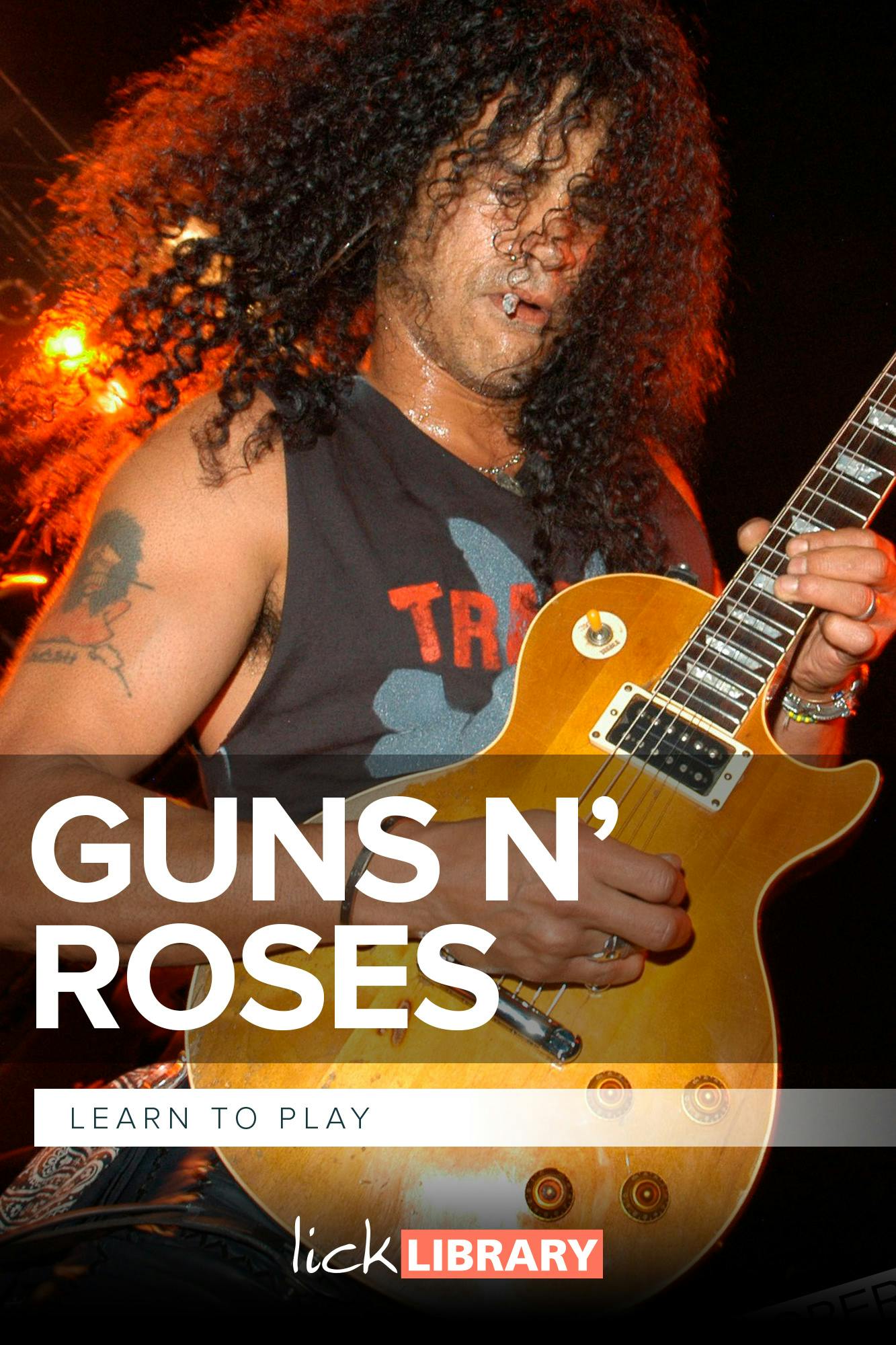
Learn to play in the style of Guns N’ Roses with Danny Gill at Lick Library. Explore riffs, phrasing and Slash inspired techniques.
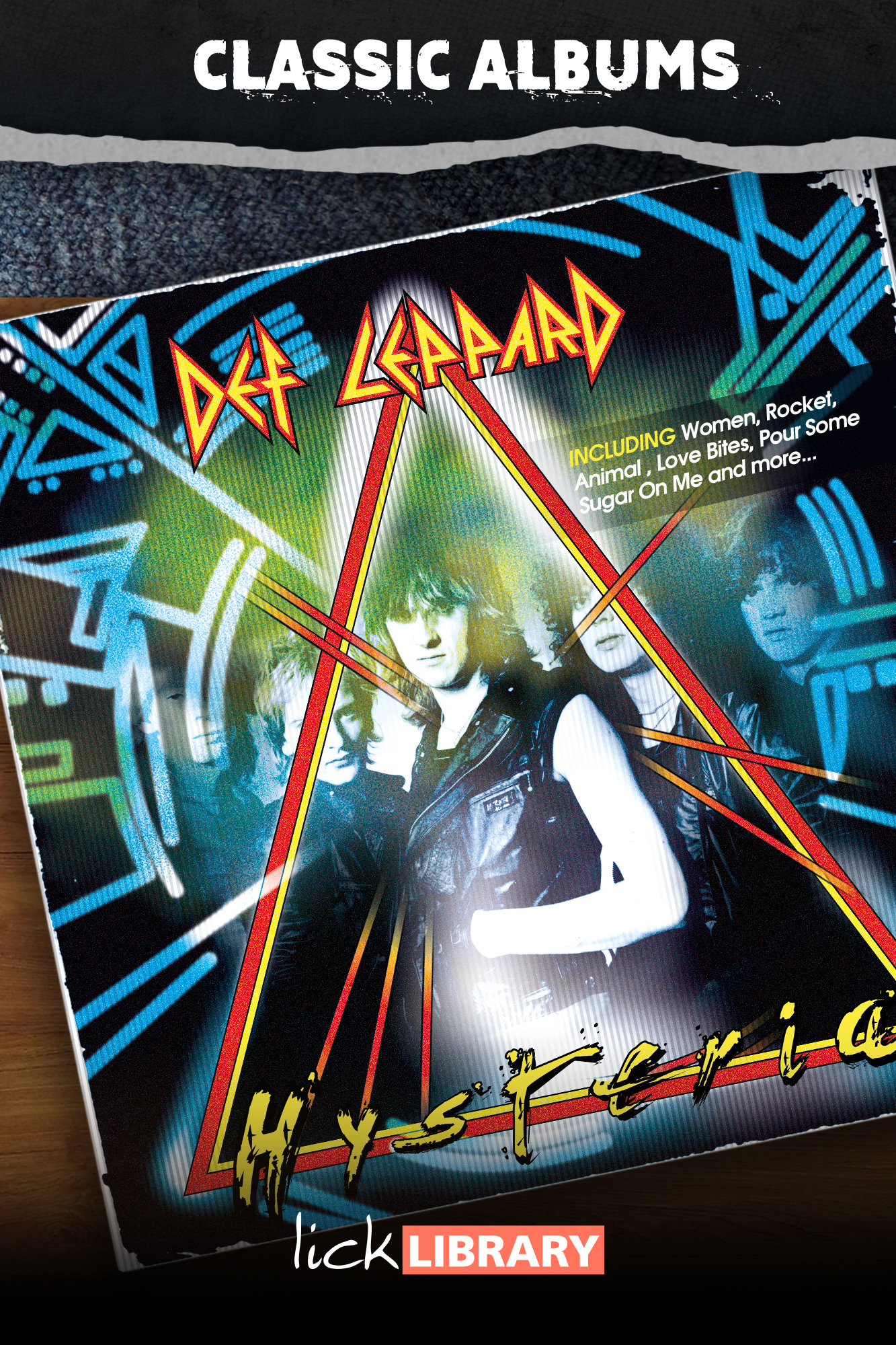
Explore Def Leppard’s Hysteria with Jamie Humphries at Lick Library. Learn polished riffs, melodic solos and classic 80s rock tones.

Learn classic rock guitar solos with Jamie Humphries and Stuart Bull at Lick Library. Explore phrasing, tone and iconic lead techniques.

Explore Whitesnake’s 1987 with Danny Gill at Lick Library. Learn polished riffs, soaring solos and 80s hard rock guitar techniques from this iconic album.

Learn the secrets behind iconic solos with Nick Jennison. Master arpeggios, phrasing, and advanced techniques in this in-depth guitar course.
Expand your soloing skills with bonus material at Lick Library. Develop phrasing, timing and confidence in rock lead guitar.
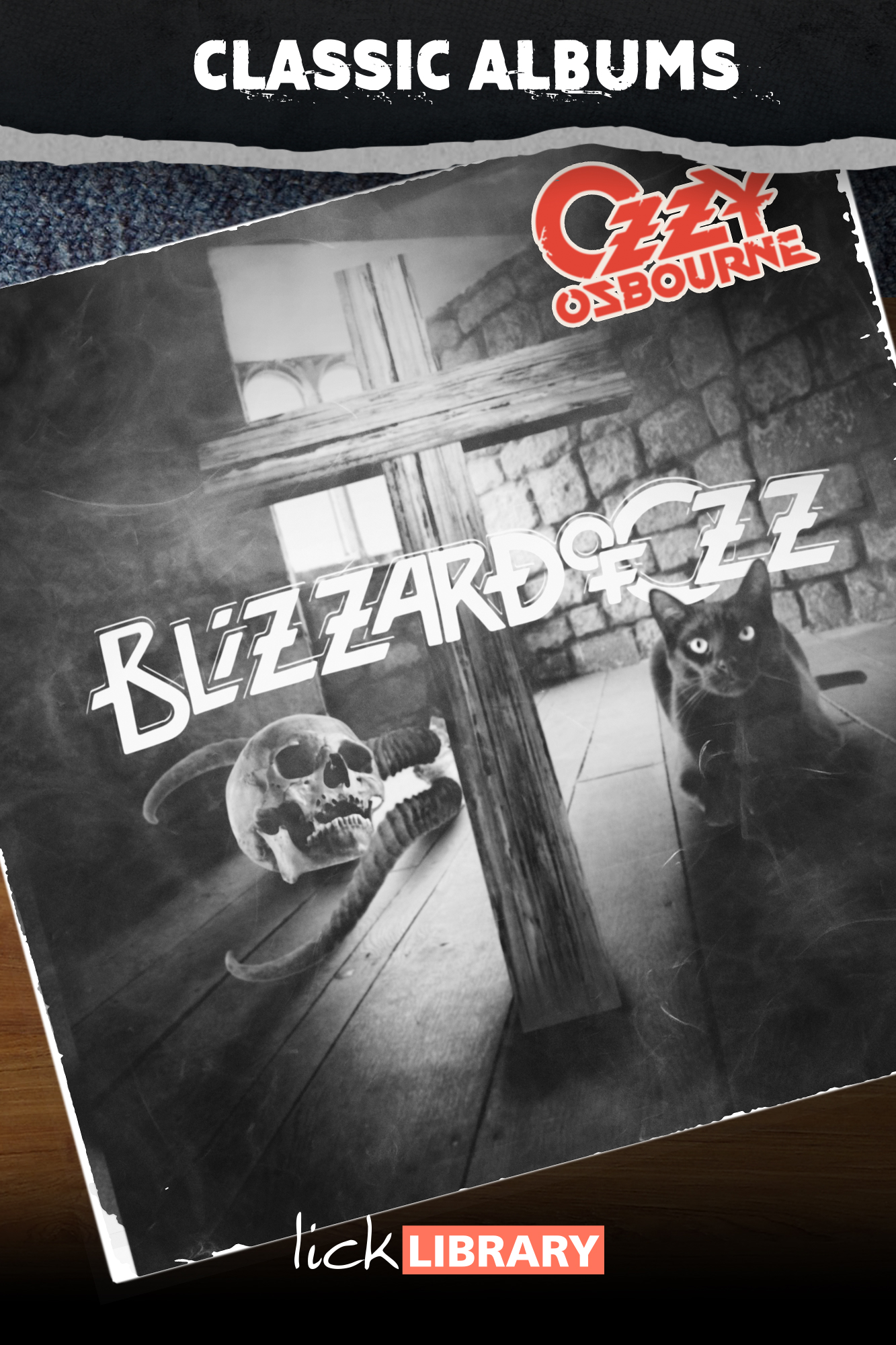
Study Blizzard Of Ozz with Danny Gill at Lick Library. Learn iconic riffs, solos and techniques that launched Randy Rhoads into guitar history.

Explore Van Halen’s 1984 with Jamie Humphries at Lick Library. Learn synth-driven rock riffs, solos and iconic guitar techniques.

Learn 20 classic rock riffs with Danny Gill at Lick Library. Build your repertoire with iconic riffs and essential rock guitar techniques.